NZNO's Blog


Leave a comment

Our leaders speak: Find your why

Kerri Nuku Kaiwhakahaere
Tōpūtanga Tapuhi Kaitiaki o Aotearoa NZNO

Despite the difficult workforce and working conditions at the height of COVID, nurses were part of the critical workforce providing care under such extraordinary circumstances. Internationally hailed as heroes – the nurses didn’t ask for bouquets or applauds, they are trained and skilled to work under these exceptional situations. They asked not to be forgotten once the crisis was over.

Unfortunately, that is exactly what has happened.

Over the past four years, I have seen nurses challenge the political narrative that the health system and nursing workforce isn’t in a crisis, that workplaces are safe and adequately staffed and that health system is built around quality of care with the patient central to that care. While the reality is that nurses are still fighting for compliance with collective agreements, holidays payments, understaffing, and a lack of investment in health funding while there is criticism that nursing is the reason for the health budget blow out.

It is hard to image patients at the center of care when the language being used to describe the health sector seems more like a production line, words like productivity, efficiencies and effectiveness, and maldistribution of the workforce.

Almost two weeks ago in the build up to the Indigenous Nurses Aotearoa Conference, in a media release, I spoke of the anger of Māori nurses fed up with the historical issues of underfunding, pay parity and working conditions. But additionally, the frustration amplified further as legislation is set to roll back the gains made by Māori since the passing of Te Tiriti o Waitangi Act almost 50 years ago.

The Coalition Government’s efforts to remove references to Te Tiriti from legislation and Crown entities, exemplified by the proposed Treaty Principles Bill, not only threatens to deny Māori as Indigenous people but to erase Te Tiriti/the Treaty in law.  From health, to education, to the environment, to social services, there will be no recognition given to Te Tiriti/the Treaty. While this is significant, it is yet another blow to the already numerous legislative changes attempting to dismantle mana Motuhake. From the dis establishment of Te Aka Whai Ora, rolling back the official use of te reo Maori, threats to Maori wards, repeal to smokefree legislation and diminishing the importance of whakapapa for children in state care through the remove of 7aa, just to name a few.

These nurses are not only committed to the fight to protect their tino rangatiratanga, but also to fight to protect the work they do as nurses, kai mahi and tauira.

Nursing is being squeezed everywhere and the role of the nurse will become less and less about the unique and intimate relationship between nurse and patient, but rather transactional episodes to meet production efficiencies.

Over the coming months, nurses must take to the streets and join together to fight back. 

Find your why and help create the future for nursing as nurses, health care worker, kaimahi and tauira!

Kia kaha!


Leave a comment

Our leaders speak: Stand up fight back, workers’ rights are under attack

Kerri Nuku Kaiwhakahaere
Tōpūtanga Tapuhi Kaitiaki o Aotearoa NZNO

International solidarity is critical! In recent weeks as representatives of NZNO, we were given the opportunity to interact with our visiting colleagues from the US. What we found was that even though they are a world away their problems are similar.

We discovered one of their main issues as well was solidarity of nurses. There is power in solidarity and nurses worldwide need to unify now more than ever. We need to fight back against the powerhouses in authority, and health as the link to get us where we need to be in order to fight for the social justice that society’s most vulnerable deserve. Therefore, it is critical that we share information and ideas.

We can use health as an access point to think about justice broadly. It’s where we see the physical, emotional and mental toll of racism, colonialism, and dispossession firsthand. What we need is collective union voice of nurses to fight back not just to protect the profession of nursing, but also the role that we have as unionists.

Whether we like it or not, health is intrinsically intertwined with politics. Take the US elections for example. Its impact has already reached our shores, or it is on its way. If Donald Trump gets elected as president again, the impact he will have across all three political platforms will be detrimental to workers’ rights. The US unions are terrified of as they know that as soon as Trump comes in, it will almost be the death of the unions. He will reverse the rights of workers and the right to unionise.

There is an uncanny parallel between Trump’s Republican Party and our coalition Government. They’re both all about privatisation and building capital and privatised wealth. In Aotearoa, we’re witnessing the power of the Government to make or shift government policies to the right.

What Aotearoa urgently needs is a government that understands the value of healthcare. It is our jobs to ensure they understand this. NZNO has been described as militant, but I think it’s what is required from us. We’re here to protect the rights of workers and we’ve got to remember that. The union is about holding strong and allowing members the freedom to do their work.

As a union, we need to make sure that we’re united. It’s about Kotahitanga because Kotahitanga to me, is not just about being united, but caring for those you need to unite. That’s what we need to do as a union. We’re going to face many battles, but we’ve got to be clear, and remember those who have struggled for us to get to where we are today. And we’ve got to make sure that we leave it in a better place for our mokopuna so we’ve got to keep holding the line and keep pushing forward.

And like we’re doing and it’s significant that we share information and ideas.

I want to conclude by saying this is our fightback and this is our opportunity to push back. This week, I listened to the Access health workers battle cry: “Stand up fight back, workers’ rights are under attack”. and I think we’ve got to really keep that in the forefront because we are seeing workers’ rights diminished and our power undermined. And we are finding it more and more difficult to work in the health sector unless we are united.


Leave a comment

Our leaders speak: Following the rules (Yeah? Nah!)

Anne Daniels, President
NZNO Tōpūtanga Tapuhi Kaitiaki o Aotearoa


I recently read that “stories aren’t written about women who follow the rules. Stories are written about women who break the rules and show us all what’s on the other side”.

In 1893, Kate Shepherd led the way for all New Zealand women (Māori and Pākehā) to vote. But for some women, where rules are adhered to religiously, the vote has taken a lot longer. It wasn’t until 2015 that women in Saudi Arabia, were supported to vote, but only in local elections.

Following the rules does not lead to change.

Gender equality in New Zealand is taking a lot longer. Women like Kristine Bartlett, a professional caregiver, successfully argued in the Employment Court that her low hourly pay rate was a result of gender discrimination under the Equal Pay Act. She advocated for pay equity and won her case in 2013. But caregivers are back battling against further disadvantage and discrimination in our New Zealand streets again today.

Some say, if it’s not broke, don’t fix it. But when something is broken, a decision needs to be made about whether it’s worth fixing or in our throw away society, whether to toss it.

Our health system is broken. Worse, it is not being fixed by those who can fix it, the Government and nurse employers. It needs to be fixed. We can’t let it be tossed aside and replaced by a (worst case scenario) private insurance-based health care. We all know that doesn’t work either.

Nurses make the health system function. We deliver majority of the health care. But it’s not functioning at all well now. We need many more nurses, midwives, and health care assistants. Since 2001, NZNO members have been crying out for safe staffing. In response, NZNO proposed to the government of the day that they fund a nurse patient ratio pilot. But this was rejected. We argued that we need enough nurses, with the right knowledge, skills, experience to provide safe care, where and when its needed. Nurse shortages were predicted and there was a real need for substantive planning, implementation and evaluation of options that did not include the status quo because it just wasn’t working.

Now, 23 years later, despite the introduction of Care Capacity Demand Management (CCDM) following a safe staffing and healthy workplaces inquiry in 2006, the predicted nurse staffing shortages and crisis are the lived experience of all our 62,000 plus members, every day. A 2022 review of CCDM exploring why the program has not achieved safe staffing and how we can do better, found we are just not growing enough New Zealand nurses in this country. Bottom line, there are not enough nurses to provide safe care.

Successive governments and nurse employers have failed our nurses, midwives, and health care assistants by not walking the talk. The Memorandum of Understanding 2018 to fully implement CCDM by 2021 has not been met. Talking with government officials about the need for action, never sees change. This is why we need a fit for purpose culturally safe nurse patient ratio legislation, underpinned by CCDM. Our trust in those who should be following the rules of the ethics of meeting agreed contractual obligations has dissipated. But why should we be surprised when the obligations under te Tiriti o Waitangi have never been fulfilled.

Maintaining the status quo is not an option as our health system is broken. It is up to us to stop doing what is expected and do the unexpected. Advocacy is about influence through rational discussion. When that doesn’t work, activism must take its place.

We cannot afford to lose one more nurse from our health system. We cannot afford to wait and hope that someone, somewhere will do right by us and those we care for. We cannot afford to keep asking. Now is the time for telling. Now is the time for unexpected, innovative action.
Nurses, who are natural leaders, will harness their anger and energise change through action.

This is our why. We will no longer tolerate ratio Injustice, racism, gender discrimination, rejection of our truth, our experience, and our evidence. He Tipua – Ratio Justice conference is just the beginning.


1 Comment

Fighting the good fight – are we there yet?

Leadership blog, by Anne Daniels

Kerri Nuku ended her recent Leadership blog on pay equity with an important whakataukī, Ki te kotahi te kākaho ka whati, ki te kāpuia, e kore e whati – When we stand alone we are vulnerable, but together we are unbreakable.

We have some loud voices standing strong, but only from some of the many members we have. We need to all raise our voice because this fight isn’t just for DHB Nurses, or even all nurses. This fight is for all women everywhere in New Zealand and throughout the world. History tells us why.

The fight for fair pay for women started in the 1890’s for New Zealand women principally by the newly formed National Council of Women. In 1957 the Council for Equal Pay and Opportunities (CEPOP) was formed by a coalition of women and men’s organisations and unions and later in 1986, the Coalition for Equal Value, Equal Pay (CEVEP) was set up by women’s groups and unions with the Nurses Association prominent among them. After decades of organising, the Labour Government introduced the Employment Equity Act in 1990 to “redress past and present discrimination experienced by women in the labour market.” But this historic legislation was quickly repealed by the new National Government the same year.

This is the political context when, as a young nurse dissatisfied with pay and conditions, I became one of the few NZNO delegates in 1990. Since then, I’ve been in many campaigns for the same thing, fair pay and conditions. Each time we’ve failed because we were too trusting. In 2010, we received a small pay jump but within a few years the buying power of this rise had fallen away. Successive governments continue to fail women, reflecting the ingrained patriarchal attitudes of both men and women in power.

And here we are one hundred and twenty-two years later still fighting for justice. Ironically, our current Labour Health Minister has a union background and our female Prime Minister stands on the shoulders of women who fought for equality. We expect them to stand with us, not against us to right the wrong of the perpetual injustice of women being underpaid, while also enduring substantially poorer work conditions than men receive.

We can’t wait for others to do right for women. We must take our fight to the streets and join with all women, everywhere in New Zealand, as our fight is their fight. We put this government and any successive government on notice. We will fight without ceasing until we win, as together, we are unbreakable.

References:

Equal pay in New Zealand from 1988 to present (cevep.org.nz)


Leave a comment

Why does NZNO have a President and Kaiwhakahaere as co-leaders?

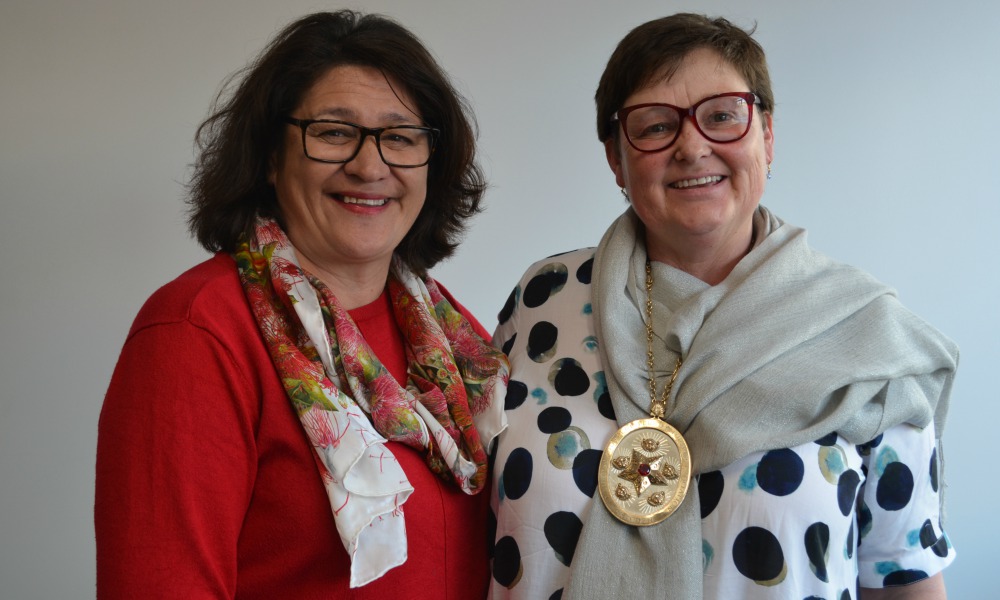
NZNO Kaiwhakahaere Kerri Nuku (left) and President Heather Symes

By NZNO President Heather Symes

NZNO has both a President and a Kaiwhakahaere as governance co-leaders. Among other things we chair the Board, and act as its public face and spokespersons when required. As Board members we have oversight of the organisation and its member groups, but we do not involve ourselves in the day-to-day running of the organisation (e.g. advocacy, the MECAs, Pay Equity etc). This work is done by staff and is managed by the Chief Executive.

So why are both a President and Kaiwhakahaere necessary?

Essentially we have these two offices working co-operatively as part of NZNO’s commitment to becoming a bi-cultural organisation and to working under te Tiriti o Waitangi.

It is important we acknowledge and work within te Tiriti so we can address appropriate cultural lenses to our organisation and its activities.  As a nation we cannot expect to move forward in unison unless each te Tiriti partner is aware of and respects the other’s worldview and approaches. We try to operate under te Tiriti in the same way as an organisation.

The Kaiwhakahaere is also the leader of Te Rūnanga (the Māori arm of the organisation) and supports Māori members by representing Te Rūnanga’s views to the Board. The Kaiwhakahaere also advises the organisation on what is culturally appropriate from an indigenous perspective.

The NZNO President has to this point never been indigenous, and brings a different (usually more western) cultural worldview. This means that together we have a rich tapestry and wealth of knowledge. But we are both equally accountable to members and work together to ensure plans going forward are good for members and therefore good for all in Aotearoa New Zealand.

Both positions are democratically elected, but there is a difference in how this is done for each. The President is elected by all paying members and can serve a maximum of two three-year terms. The Kaiwhakahaere is elected by Te Rūnanga at Hui ā tau every three years, but may serve more than two consecutive terms.

This is part and parcel of the bi-cultural approach we work towards under te Tiriti and an acknowledgement that different cultures may approach things like leadership differently.

It is entirely appropriate that the Kaiwhakahaere is elected only by Māori members but it is also important to note that his or her power is not unlimited. The Kaiwhakahaere’s performance is examined at each Hui ā Tau and they must be endorsed on a yearly basis to remain in the position. The President faces no such requirement. 

I hope that makes the co-leadership roles of the Kaiwhakahaere and President a little clearer.


2 Comments

Year of the Nurse and the Midwife – Reflecting back as we move forward

by NZNO Kaiwhakahaere Kerri Nuku and President Grant Brookes

The World Health Organization has designated 2020 as the Year of the Nurse and the Midwife. NZNO will be joining in to celebrate the contributions nurses and midwives make and to envision the even greater contributions we can make in the future.

As we reflect on the mahi of nurses and midwives, we take inspiration from the whakataukī: “Titiro whakamuri kōkiri whakamua – Look back and reflect so you can move forward.” In so doing we honour our ancestors and learn from past mistakes.

2020 also marks the 200th anniversary of the birth of Florence Nightingale. Florence is a hugely important figure in the development of our profession, but she left behind a mixed legacy.

Nurses, midwives and tohunga have been serving their communities and practising healing in Aotearoa for centuries; from long before when Florence was advising Colonial authorities in Aotearoa New Zealand about how to prevent the “inherent diseases” of the “savages” from leading to their extinction, as they were brought out of “barbarism” through “the inestimable blessings of Christian civilisation”.

In fact much of our nursing history has been marred by these sorts of conservative and racist views, some of which persist today.

Returning to the whakataukī with which we opened, here are just some of the notable figures and events in our history we can look back on:

  • In 1901, thanks to the pioneering efforts of Grace Neill, Aotearoa New Zealand became the first country in the world to pass legislation recognising the qualifications and status of registered nurses. Recognition of registered midwives came three years later.
  • In 1902 Ellen Dougherty of Palmerston North became the world’s first registered nurse.
  • Akenehi Hei became the first Māori nurse and midwife to register under her own [Māori] name six years later in 1908. However, Māori trained nurses were providing care even before official registration began, following in the footsteps of Mereana Tangata (Mary Ann Leonard) who qualified in 1896.
  • Founded in 1908, Kai Tiaki Nursing New Zealand is one of the world’s longest running nursing publications. Last year, Kai Tiaki became one of just 20 publications so far inducted into the Nursing Journal Hall of Fame at a ceremony in Reno, USA.
  • Turning 111 years old this year, the New Zealand Nurses Organisation Tōpūtanga Tapuhi Kaitiaki o Aotearoa is proud to be one of the world’s first professional nursing associations.

Our indigenous and home-grown nurses and midwives have made an immeasurable contribution throughout the 20th and 21st centuries towards raising the health of all peoples in Aotearoa New Zealand. They’re now being joined by our internationally qualified nurses, too.

However, our health system today is under strain. Distressing health inequities persist and nurse and midwife shortages are predicted to grow. Historically our work has been undervalued because we are a female dominated profession. Thankfully an end is finally in sight, with the first Pay Equity settlements due this year. Entrenched pay disparities for those in Māori-led health care providers could also be closed at last, thanks to years of campaigning and a landmark claim lodged with the Waitangi Tribunal by Te Rūnanga o Aotearoa NZNO.

Nurses and midwives need to be properly deployed, valued and included in policy and decision-making. By the end of 2020, we hope to achieve greater investment in improving education, professional development, standards, regulation and employment conditions for nurses and midwives. Our goal is greater influence for nurses and midwives on health policy, more nurses and midwives in leadership positions, and more opportunities for development at all levels.

The needs of the 21st century also require innovative services that make better use of new technology. We need more community and marae-based services that are holistic and people-centred, as well as an increased focus on prevention and on undoing the harm caused by colonisation. These are all areas where we can play a leading role.

Finally, it is our hope that by the end of 2020, NZNO’s Strategy for Nursing 2018-2023 will be accepted across the health sector. This would signal a stronger commitment to a safer and more equitable future for all nurses and midwives in Aotearoa New Zealand.

“Me haere tahi tātou mō te hauora me te oranga o ngā iwi katoa o Aotearoa”, “Let us journey together for the health and wellbeing of the people of Aotearoa” (Rev Leo Te Kira 15 December 2005).


Leave a comment

NZNO Chief Executive Memo Musa: AGM Speech 2019

17 September 2019

Tēnā koutou, Tēnā koutou, Tēnā koutou katoa.
It is my pleasure to welcome you all here to NZNO’s 26th AGM and to the Conference tomorrow.

I would like to acknowledge the outgoing Board, the incoming Board, Te Poari and the Membership Committee. I would like to thank our exhibitors and sponsors for both the AGM today and Conference tomorrow, and especially our sponsors Summerset and Pharmac.

The theme of tomorrow’s Conference is “Leaving No One Behind – Health For All” and I want to talk about the past financial year in light of that theme which captures the very reason we exist as an organisation.

We are here to support nurses, midwives, student nurses and health care workers as they work daily to ensure “no one is left behind”.

Nurses are there for us from the day we are born to the day we die, and on many occasions in between. They provide expert but compassionate care, often under trying circumstances. They are trained, knowledgeable and skilled, and they positively affect the health and wellbeing of us all.

The theme of our AGM and Conference is an appropriate one as it relates to the first pillar of our Strategic Plan which is improved health outcomes.  We want a sustainable, strong and skilled nursing workforce (the second and third pillars) so all people living in New Zealand can be healthier, and no one is left behind.

On top of what we achieve for members by supporting them in their nursing professional practice and negotiating collective agreements, there is the collaboration we engage in with the Ministry of Health, employers and other partners to improve working conditions and achieve pay equity.

As well as the industrial and professional support we give members daily, there is the research and advocacy work we do to improve policy around nursing both here and internationally in collaboration with other organisations.

A lot of what we do is highlighted in the Annual Report for the year 2018/19 and in my CE report within it. In what has been a challenging year, it is timely to focus on the positive. Alongside our members, we are doing many good things for the health and wellbeing of New Zealanders so no one is left behind.

I would be remiss not to mention our membership growth and finances. At the end of March this year our membership numbers reached 52,093 – an increase of 2.7 percent from the previous year; and we are currently at 51,339 members.

We ended the year with a net financial surplus of $153,288.  The gains from the investment portfolio increased that to $996,164.

I would like to conclude by reminding us, as I have done before, that united we stand, divided we fall. We are one profession with many roles and voices, we are a collective and together we can continue to have a massive influence. Together we make an effective team.

I would like to place on record my sincere appreciation the work our staff have done on your behalf.  I also thank you as delegates for the many volunteer hours you have put into NZNO’s work.

No reira, Tēnā koutou, Tēnā koutou, Tēnā koutou katoa.

Memo Musa, NZNO Chief Executive


Leave a comment

A nursing renaissance – NZNO’s input into the Health and Disability System Review

Memo Musa, Chief Executive, NZNO

As many will know, the Government announced a review of the New Zealand Health and Disability System in September 2018. The purpose of the review was to identify opportunities to improve the performance, structure, and sustainability of our current Health and Disability System. Its goals are achieving equity of outcomes, and contributing to wellness for all – particularly Māori and Pasifika.

The first interim report by the Expert Review Panel (led by Heather Simpson, a special advisor in the Prime Minister’s Office) was released in early September 2019. In response NZNO met with Heather Simpson, Sarah Prentice and Margaret Southwick (a Panel member) in early October 2019 to present our work and suggestions around the report’s three key themes of Leadership, System Complexity and Equity. The presentation was prepared by Eldred Gilbert (Visibility of Nursing Project Lead), Hilary Graham-Smith (Associate Professional Services Manager) and myself, with input from Kaiwhakahaere Kerri Nuku and President Grant Brookes. The presentation was led by Hilary.

We agreed that the current Health and Disability System is not serving people living in Aotearoa New Zealand well. We discussed the utility of nursing as key to making a difference to the issues of equity and access for under-served individuals, families and communities. After all, nurses are well-versed and experienced in population health. They understand: wellness, health promotion and illness prevention; their framework for care is holistic; and they are experts in system and boundary navigation. Nurses also have a common agenda – to work in partnership in an integrated system that best serves the needs of people.

Unfortunately, the current system makes it impossible for nursing leadership to be freed up and maximised in policy and services design/delivery at a Tier 1/Primary Care level. Funding, contractual and employment arrangements constrict the way nurses practise, and impede them from working in the way they could to reduce system complexity.

It is important the Panel considers establishing a ‘peak body’ of nurses to help in co-design processes for nursing that allow for integration of services, and to develop a model of care whereby nurses can fully contribute to the health and social care needs of the population by utilising all of their skills – and this is what we have recommended. With abundant knowledge, skill and adaptability, nurses have the opportunity to offer alternative and innovative approaches to delivering health services that can make the real difference required.

Such a nursing renaissance falls well within the scope of the NZNO Strategic Plan 2015-2020. The first pillar of our Strategic Plan is to improve health outcomes by promoting excellence in patient care. The third is having a strong workforce by strengthening nursing and workforce planning, sustainability and leadership.

There remains much work to do in further developing our thinking and we will keep you updated on progress. We are pleased that members of the Review Panel are listening and that the Panel has the skills and knowledge to appreciate our suggestions.

I would like finish by thanking Eldred Gilbert and Hilary Graham-Smith for their ongoing work on this project, and Kerri and Grant for their input and support.


Leave a comment

Celebrating the International Day of the Midwife

On Thursday 3rd May midwives from Aotearoa took to the streets in a National Day of Action. Why? Like nurses, midwives are fed up with the chronic under-funding of the maternity system. Despite having launched a Pay Equity claim with the high court in 2015 midwives have largely been ignored. In the spirit of good faith the claim was taken out of court and into mediation where a new funding model (co-designed by the College of Midwives and the MoH) was agreed on. But it is waiting to be given the green light because it will involve a significant increase in funding.

Thursday saw the culmination of a two-month long campaign to raise awareness of the issues for midwives, particularly the Lead Maternity Carers (LMCs). Charlie Ferris, an LMC from Southland started the “Dear David” campaign after being told by her accountant that her business was just not sustainable. A breakdown of costs revealed that despite working up to 80hrs a week, Charlie was earning just $7.45/hr. And she isn’t alone. One analysis of LMC work has put the average hourly rate for an urban midwife at $12.80 and $7.23 for rural practice – that’s less that half the minimum wage!

After marching through the streets of Wellington we arrived at Parliament grounds where a petition with over 13,000 signatures was presented to the Minister of Health, David Clark. We heard from a line-up of speakers including Associate Minister of Health and Minister for Women, Julie-Ann Genter. A bound book of Facebook posts was also presented, and we were assured that our impassioned pleas had “been heard”.

In New Zealand there are two arms of the midwifery workforce, the LMCs and the DHB employed ‘core’ midwives. We have a symbiotic relationship and when one arm is under stress the other arm is called upon to carry the extra load. LMCs are on-call 24/7, have no sick pay or annual leave and their travel is not billable. Effectively it’s like being a contractor but without any ability to adjust your fees. Core midwives are paid under the DHB MECA and are represented by either NZNO or MERAS. It is my opinion that the lack of industrial voice for LMCs has resulted in the situation we have now where pay and conditions have become untenable. LMCs are leaving the profession in droves and our world-class maternity system is in crisis.

There is important mahi to be done in the DHB space as well. Midwives are specialists in maternity care and undertake a four-year degree programme. Despite functioning as autonomous practitioners who have the legal authority to prescribe, diagnose and discharge we are not remunerated as such and so feel very under-valued! I am hopeful that the pay equity process which forms a key component of our NZNO MECA claim will address these disparities.

As for funding the new co-design model, well that depends on how much gets dished out in what feels like the very long-awaited budget.

This International Midwives Day will go down in history as the year we midwives stood together, LMC and core, united and impassioned in our love for our work and our belief in delivering a quality service for the people of Aotearoa.

In solidarity
Sarah Gilbertson (Midwife, NZNO delegate)


1 Comment

NZNO celebrates World Smokefree Day by lodging our smokefree services petition

DSC_0176

Today, the 31st of May is World Smokefree Day. Every year the Health Promotion Agency puts out great resources for people want to quit smoking and stay off tobacco for good. They have infographics to download and motivational facts like the one below. Not many people know that smoking makes you deaf!

Hearing-loss_GIF

Researchers have identified though that without further big changes, New Zealand will not reach our smokefree 2025 goal, particularly for Māori and Pacific communities. That’s why NZNO was distressed when we heard last year that funding for some iwi and community smoking cessation providers was being cut, as well as for advocacy services like the Smokefree Coalition. NZNO Kaiwhakahaere Kerri Nuku said ““It doesn’t make any sense that on the one hand the Government supports the goal of Smokefree Aotearoa 2025, but on the other is pulling funding out of Smokefree advocacy services including the Smokefree Coalition, ASH and Smokefree Nurses. Every day we see the effects of smoking on our patients’ physical and mental health, and the social, economic and cultural wellbeing of their whanau. It’s heartbreaking.”

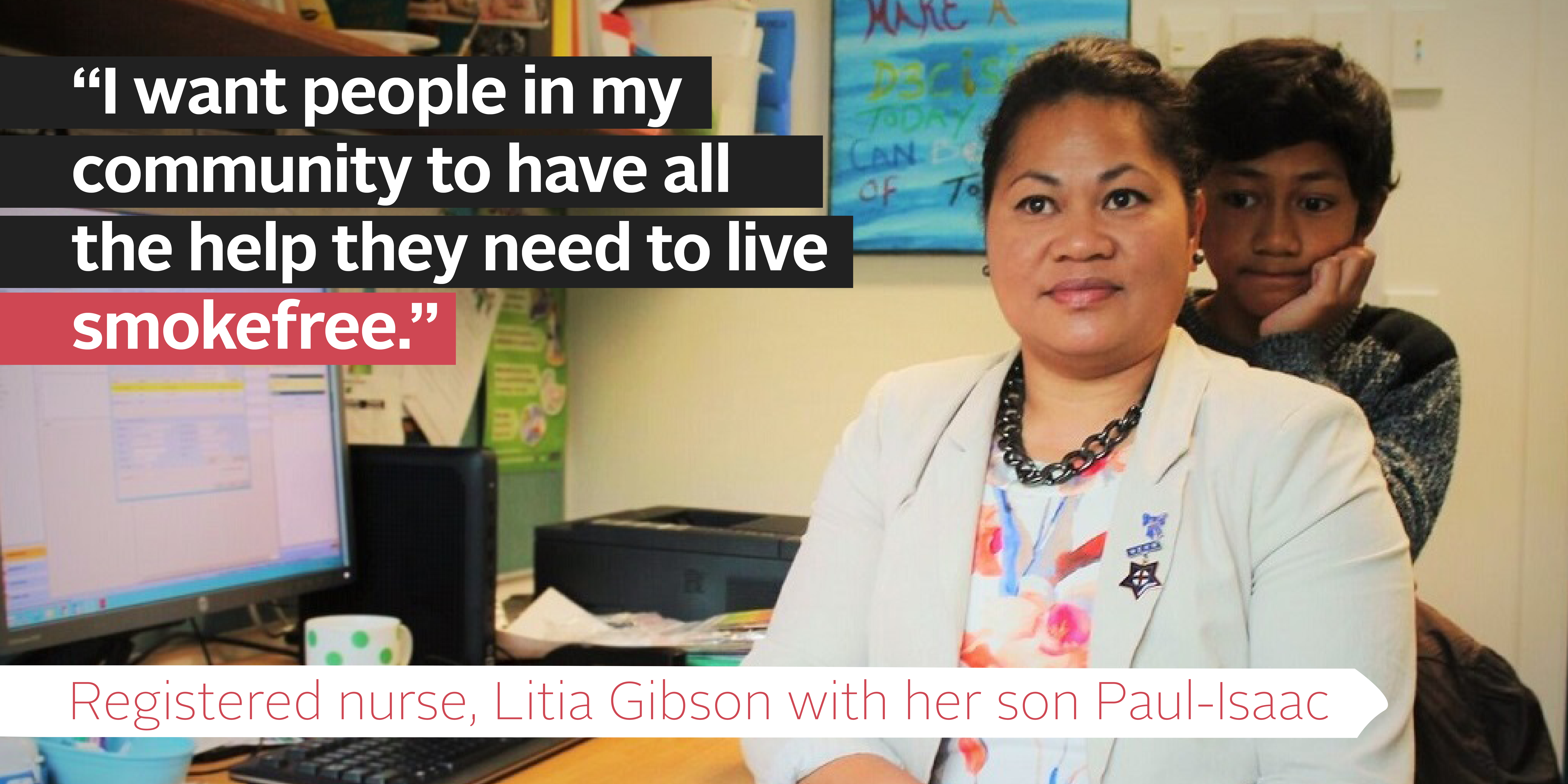
Nurses working to stop smoking in the community say they need advocacy and specialist services to refer patients to and reinforce their stop smoking message. Porirua Community Union’s Litia Gibson talked about the need for these services to NZNO last year in this video. “Any cut will affect all our services. Because it’s not just the services we provide, it’s the patients and the populations that we are caring for who are already in vulnerable positions.”

Social share3.3.jpg

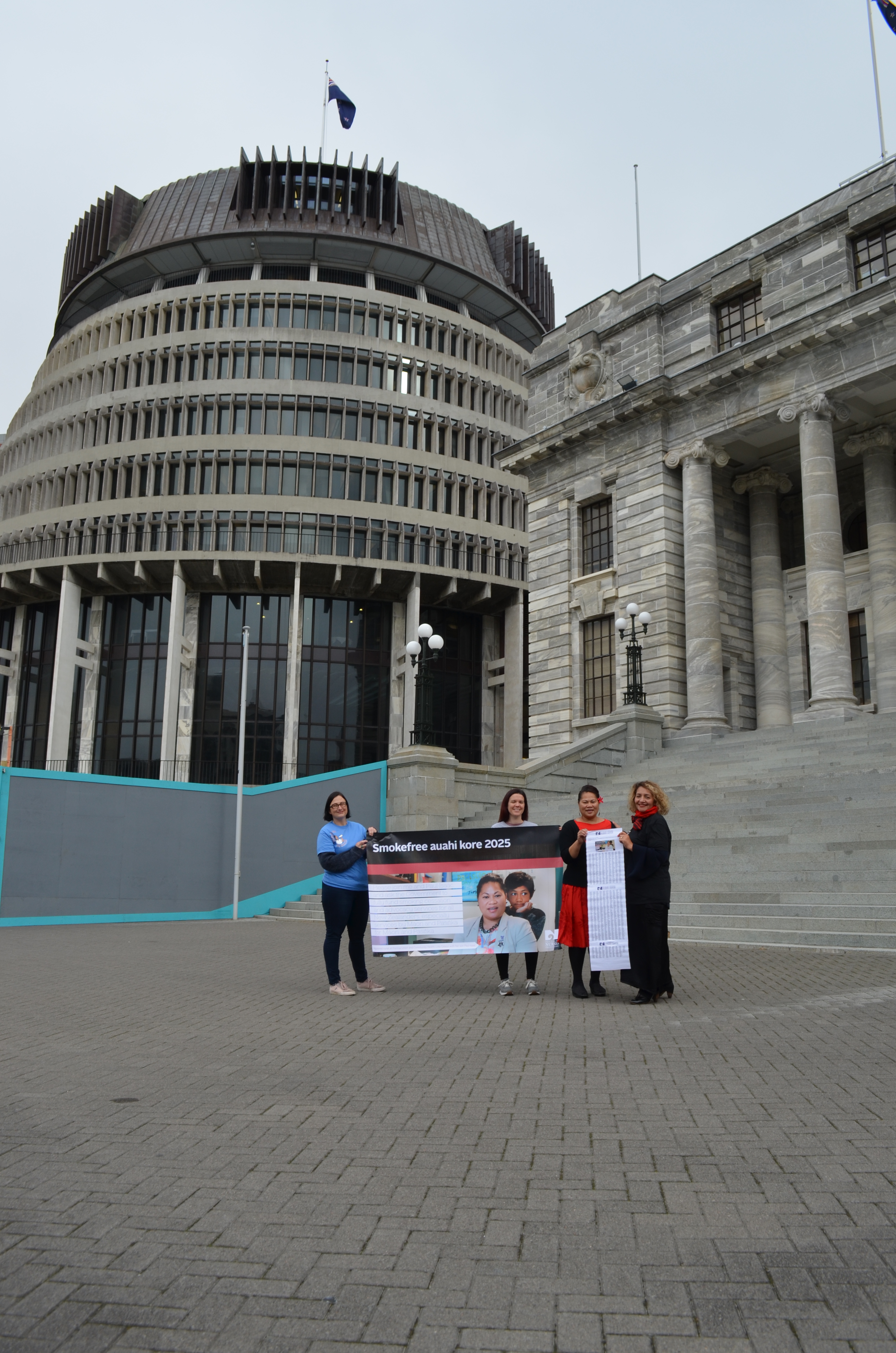
NZNO decided to run a petition with Together, the digital campaigning arm of the Council of Trade Unions, to ask for more funding for these services. Today, we delivered 1823 signed names of nurses, caregivers, midwives, kaimahi hauora and their supporters to Marama Fox MP, in recognition of the longstanding work that she and her predecessors in parliament have done on ending smoking in New Zealand.

Litia and Marama had a little chat afterwards where Litia broke down the issues around referral services and increasing workload for nurses. “Without specialist services, we don’t have the time. You need to pack so much into an appointment, because with health funding where it is, community need is so great.”

Marama agreed on the need appropriate smokefree services and the future benefit this can bring to our country. “Being smokefree puts real money back in the hands of whānau. It protects our future generations, and ensures they don’t have to make the same decision to quit because they never start. It’s all about whānau.”

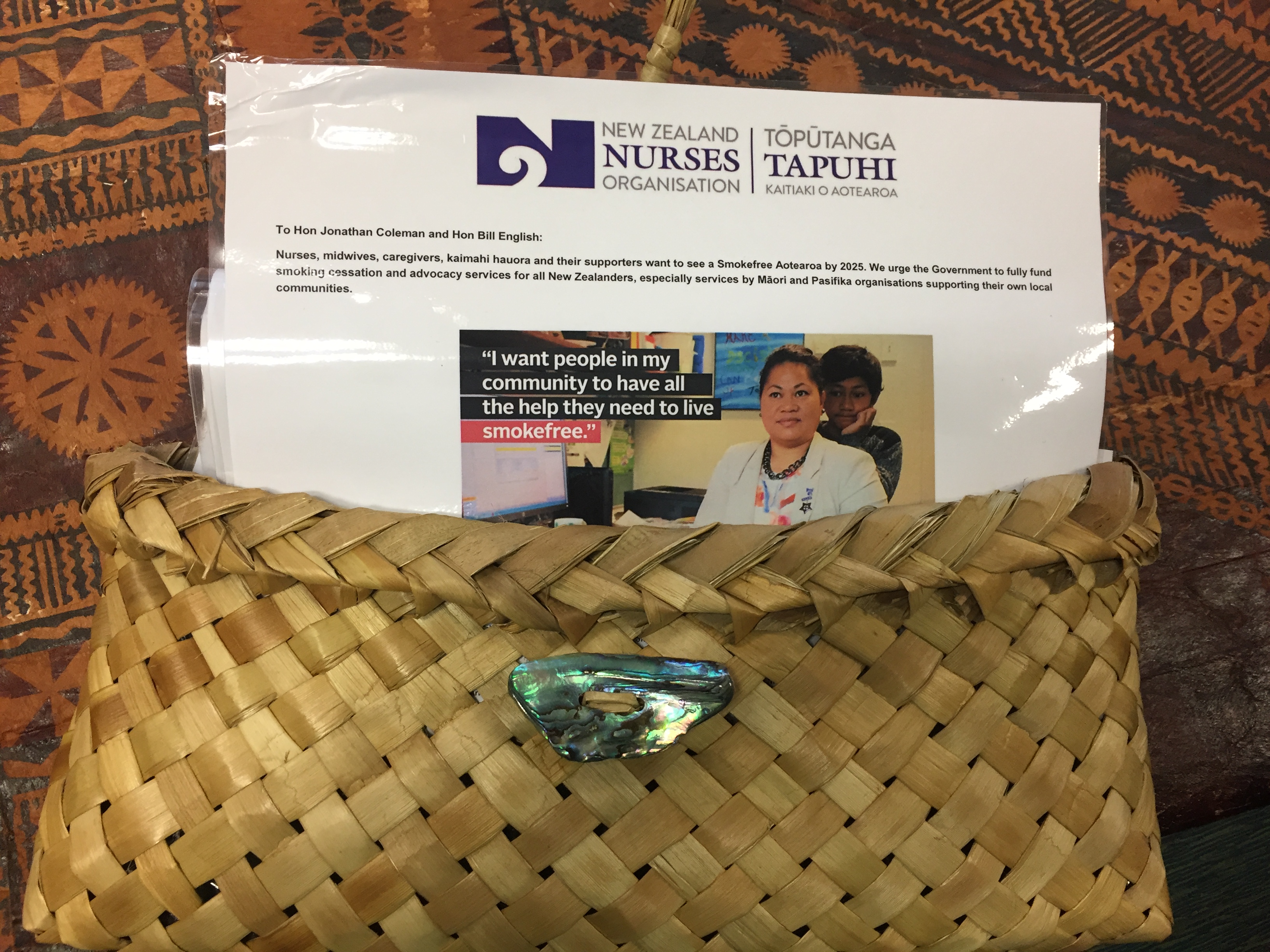
Marama had brought along a beautiful kete to put our petition in and present it to parliament. Litia in return swapped her red flower to put in the MP’s hair for the afternoon- ‘There, now your outfit is complete!’


We are proud that a little bit of NZNO is being delivered to parliament on World Smokefree day to support our Smokefree 2025 goal. Kia kaha koutou, thank you for supporting this mahi. Your names are now part of history.

IMG_1330