NZNO's Blog


6 Comments

Patients’ rights, nurses’ rights

stress-feature01NZNO delegate, Erin Kennedy asks an important question: “Is unsafe staffing a breach of the Code of Health and Disability Services Consumers’ Rights?”

Like most nurses, I am not easily shockable, but I found myself almost speechless last week on learning that three nurses had been forced into the position of caring for 40 patients overnight on a heavy orthopaedic ward. (A pool nurse also came to help for part of the shift.)

NZNO organisers and delegates have argued strongly for safe staffing for years now, but unfortunately, the level of permanent and pool staffing means that staffing levels including skill mix are often unsafe, with sick staff unable to be replaced. The constant push to avoid financial penalty when the 6-hour Emergency Department rule is breached also leads to patients being moved from the Emergency Department to areas where there are simply not enough nurses to care for all the patients safely.

Under the Code of Health and Disability Services Consumers’ Rights, patients have a number of rights, including the right to co-operation amongst providers to ensure quality and continuity of services, and the right to informed consent. The right to be fully informed means information must be conveyed to the patient in a way that enables the patient to understand the treatment or advice. Right 6 of the code states that every consumer has ‘the right to the information that a reasonable consumer, in that consumer’s circumstances, would expect to receive’. Specifically, it states that patients are entitled to an explanation of his or her condition and an explanation of the options available, including an assessment of the expected risks, side effects, benefits, and costs of each option.

Given the unsafe staffing levels at some of our DHBs, it is high time that explanations around surgery, for example, go further than simply outlining the procedure and its risks and benefits. Patients should ask, and should be told, whether their post operative care will be safe. A “reasonable consumer” clearly has the right to know whether their recovery might be hampered because of unsafe staffing. Certainly, if I have surgery any time soon, I will be asking whether there are enough nurses rostered on to provide all of the care I and other patients require. Will there be enough staff to ensure that I can obtain analgesia or other medications on time? Will the nurses be able to check my vital signs often enough to notice if I am bleeding, or have arrested or need medical intervention? If I need help mobilising to the toilet, will there be someone to help me or will I risk a fall and further injury? Will there be someone to answer my call bell if I need help?

Nurses do not like being forced to ration care, but until all DHBs accept that in many instances staffing levels are unsafe (for both patients and nurses), it is a fact of life and one which can seriously impact patients’ wellbeing and recovery. Not warning patients that their post-operative care may not be optimal, and could be downright dangerous, is, in my opinion a breach of the code.


6 Comments

What does the DHB MECA mean to me?

20150310_154113Kimberley McAuley is an NZNO delegate at Waikato Hospital. She was asked to speak at the event held there yesterday celebrating 10 years of the DHB MECA. This is her speech. We think it’s fantastic!

To be truly honest with each of you present today, when I was first asked to present a small talk on what the MECA means to me, at the birthday party celebration of the 10th anniversary of the MECA, I was a little taken back because: a) public speaking is not one of my strongest points, and b) I was actually going to have to really contemplate and reflect on this question.

Firstly, before I let you in on what ‘the MECA means to me’, I will introduce myself to you all. My name is Kimberley McAuley. I am a registered nurse, I work in the main operating theatres for Waikato District Health Board and I am an NZNO delegate for my workplace and have been for the past 6 months.  I have been a registered nurse for only three years, so less time than the MECA itself has actually existed.

To be quite frank, for my first two years of practice as a registered nurse, or at least the first year anyway, I had no idea what the MECA was about, let alone what it meant it me. I’m not actually sure if I knew the MECA even existed. However, over the past year I have really come to develop a deeper understanding and appreciation surrounding the MECA and the value that the MECA has not only for nurses, but additionally for our HCA and midwife colleagues as well.

For me personally, the major underpinning of the DHB MECA is the element of unity. The MECA is what holds us all, as nurses, together. The MECA works to ensure that we, as nurses, are ALL looked after.  The MECA ensures that we have decent pay, and decent conditions of work. The MECA ensures that we, and all nurses in DHBs throughout New Zealand, work under the same terms and conditions.

Personally, I can vouch and admit that at times, I don’t feel that I get the salary that I deserve when I think about the hard work that I invest into my role as a theatre nurse; the extra hours that I do, and the heart, soul, dedication and passion that I put into my tasks and responsibilities on an everyday basis. I can additionally vouch for the fact that often, and very often of late, feel that I do not have adequate conditions in my workplace. However, without this unifying MECA that we all belong to, I believe all of our workplaces and related factors to our workplaces would be a lot worse of without our MECA. This multi-employer collective agreement, in my eyes is the glue that sticks us all together, and what unifies us all.

So, to conclude, I would just like to say a big happy birthday to our MECA and long may it prevail and be there for us!


1 Comment

Employment law changes – the long answer

ERA changesA couple of days ago, on Facebook, a member asked what NZNO were actually going to do about the changes to employment law, apart from posting stuff on Facebook.

Well, good question. The short answer is lots! The long answer is… longer – I’ll make a start here and see how far I get today.

The first thing I want to stress is that NZNO is its members. We are a member-run organisation. That means staff are essentially employed by members, through their membership fees. The strength of our organisation comes entirely from how many members there are, and how willing those members are to get involved in the work of the organisation.

Thousands of NZNO members are workplace delegates, thousands belong to Colleges and Sections. Thousands are active sharing information and having discussion about our issues on social media. Many inform themselves and their colleagues by reading our monthly publication Kai Tiaki Nursing NZ. We have a Board of Directors and a Rūnanga elected by NZNO members. You can be as involved as you want to be.

NZNO is as strong as its membership. 

So – the next bit of the answer is about the changes to employment law. They are wide ranging changes that have been touted by the Government as fair, reasonable and just “tweaking” things. If only!

These changes have the potential to drive wages down, increase poverty and tip the balance of power between workers and employers firmly into employers’ hands.

We have been fighting these changes for a long time. In 2013 over a thousand NZNO members wrote submissions against the Employment Relations Amendment Bill to the Transport and Industrial Relations Select Committee. Over 10,000 submissions were received by the committee. I can’t remember the exact numbers but something like 98% of the submissions received were against the changes being proposed.

The Government didn’t have the numbers to pass the legislation last year, but it was first on their agenda after the Election.

We have been working hard along with the Council of Trade Unions and other health unions over the last 18 months to mitigate some of the worst changes of this new employment legislation.

Our risk assessment when the changes were first signaled showed us that our vulnerabilities were most focused around three key areas of the Act:

The 30 day rule is repealed

This means that new employees who are not union members will not be covered by the collective agreement even if their job comes within the coverage clause. Until last week, new employees were covered by the collective agreement in their workplace for the first 30 days. This protection is now stripped away so a new employee can be they can be paid less than the collective agreement right from the start. Over time this will reduce everyone’s pay and conditions.

Employers opting out of MECA bargaining

Employers will be able to opt out of multi-employer collective agreement (MECA) bargaining. An employer who seeks to opt out of MECA bargaining must give written notice to all intended parties to the bargaining within ten days of receiving the initiation notice. This could dismantle MECAs that have brought steady improvements in pay and conditions for NZNO members over the years.

Removing the duty to conclude bargaining

It is no longer a breach of the duty of good faith to fail to enter into a collective agreement.

Employers are now able to apply to the Employment Relations Authority to declare bargaining is over. Once that happens:

  • employers will be able to put pressure on individuals to agree to lesser pay and conditions
  • industrial action will be unlawful for two months

Here are a few examples of what we have been doing and will continue to do to address these attacks on workers fundamental employment rights.

We have been implementing our strategy to address both the 30 days and the conclusion of bargaining issues with new clauses in our collective agreement bargaining over the last 12 months and this work is ongoing as collective agreements reach the end of their terms.

We have been including in bargaining clauses to address the issues around conclusion of bargaining.

We will be back around the computer making sure initiation of bargaining for collective agreements is undertaken at the soonest opportunity and that conversations happen with employers around this matter to ensure coverage of collective agreements remains as it is currently.

Our sector groups (DHB, Aged care, Primary health and Private hospitals and hospices) have been identifying strategies for each particular sector.

We have developed resources for organisers to discuss with delegate the process for new employees.

We have been able to initiate all our MECA bargaining prior to the Act coming into force and maintaining collaborative relationships with as many employers as possible to secure our future MECAs and national collective agreements.

We have been participating in conversations with the CTU around the Code of Good Faith.

We have been educating our delegates and members through the Bad Medicine Campaign, delegate training and other processes.

We are strong, growing and ready for the future. We need to maintain the upmost vigilance with our employers who we have collective agreements with – we have learnt from the 1990s that our aged care employers pose the greatest risk in this type of industrial relations environment. We have been here before and thrived.

Kia kaha. We will build power through our unity.

Talk to your NZNO delegate or organiser if you’d like to become more involved.


4 Comments

A demand to be taken seriously

dilbert-ceo-payNZNO delegate Ady Piesse is an activist for fairness at work and an advocate for collective action. This blog post has previously been published as a comment on Facebook. 

I’m a thinker….I think a lot. Sometimes I’m accused of over thinking, but generally my thinking usually provides me with ideas or helps me problem solve.

So, a couple of weeks ago, I got to thinking – what do I do in my job that is so different from my CEO’s that justifies our salaries?

At the start of every shift I check my equipment so if that cardiac arrest, acute SOB, trauma or the blue floppy baby arrives unannounced, I have the confidence that myself and my colleagues will be able to use that equipment to potentially save a life.

My CEO makes sure his lap top ‘on’ button works.

I monitor numerous pieces of equipment attached to my patients, checking for those spiralling trends so I can intervene early if I need to.

My CEO monitors computer screens that check to make sure my patients are meeting the six hour targets.

I do ‘end-of-bed-o-grammes’ all day every day, with new patients, existing patients, other nurses’ patients, to monitor change, deterioration or improvement.

My CEO looks at spread sheets to see how hard I’m working or how much harder I can be made to work.

I hold in my hand medication that has the potential to kill or to cure.

My CEO holds a pen, an iPhone.

I sit holding a patient’s hand while a doctor tells her and her family her condition is terminal. I hold a child’s hand. I hold the hand of a terrified patient who can’t breathe. I hug people I only met today and know won’t be here tomorrow.

I don’t know if my CEO has ever held a hand or given a stranger a hug.

Every day I take home people’s stories; for some it will be the worst day of their lives. These people have faces and I know some will never leave my memory.

My CEO takes home statistics.

Some days I leave wondering if I have it in me to keep doing what I’m doing – less is not more in my job – but my CEO seems to think so.

I know it’s all more complex than that.

I use my knowledge and observation skills to think ahead and intervene early to avoid a failure to rescue situation, my CEO uses their knowledge and observations to think strategically, for example.

What I’m thinking doesn’t take away from the important role my CEO plays in the day to day running of my organisation, but thinking simply – that’s about the bones of it.

Then some more thinking. I play a damned important role in this organisation too, so how is it I only get paid maybe a quarter of what my CEO earns?

And why should I feel guilty or scared of standing up and asking for more? So I’ve decided I owe nobody an apology for feeling the way I do.

More thought. Stand up and be counted, get as many colleagues on board as I can to speak out and say enough is enough!

I’ve become quite vocal in the past couple of weeks –I’ve decided to stand up for myself. I’ve realised that complaining to colleagues is not going anywhere. We need to be the very visual faces behind our MECA.

I’m guilty like many of having not gone to meetings in the past, been so apathetic to expect Government and the Boards to realise my worth and support me accordingly – I’ve been ridiculously naive! I know there are many colleagues feeling the same way and I’m hoping my ranting will given colleagues the confidence to stand up too and speak out for change!

MECA representatives at these current negotiations can only push the “we’re serious about this…” boat so far – we need to make ourselves visible to Government and our Boards and not just ask, but demand to be taken seriously,  otherwise we have another long three years of the same and more than likely, a lot worse to come.

So, be at those MECA meetings that are coming up and come with ideas! It’s time we got tough!


1 Comment

Care rationing a sad reality

Care rationing web headerNZNO believes every patient has the right to receive quality care, every shift, every day. Nurses, midwives and health-care assistants also have the right to work in safe, supportive environments and be enabled to provide quality care.

The Safe staffing healthy workplaces unit defines care rationing as: “Any occasion when an aspect of a patient’s required care is either missed altogether, unduly delayed, performed to a suboptimal standard or inappropriately delegated to someone not qualified to perform the activity.”

Is care rationing the “new normal” in patient care?  Are failing to take observations and administer medications on time, inability to turn bedridden patients two hourly, skipping hygiene cares, inability to mobilise patients  regularly, failing to provide comprehensive patient education, not answering call bells, all too familiar aspects of too many nurses’ shifts, too often?

Care rationing is unacceptable because it means patients do not receive all the care they require, it exposes patients to unacceptable risks, it can have serious consequences, it increases patient morbidity and mortality, and contravenes people’s rights to health services of an appropriate standard.

Drawing on national and international research, NZNO’s newly-released position statement attributes care rationing to a systems failure due to inadequate staffing or inappropriate skill mix or insufficient time or a combination of these factors.

The position statement was developed to articulate that care rationing is a systems failure, not a failure of individual nurses. We have chosen the term ‘care rationing’ because terms such as ‘missed care’ or ‘care left undone’ imply that an individual nurse is to blame.

Care rationing is not just another form of prioritisation. Prioritisation occurs at the start of a shift when nurses consider the work that has to be done over their shift and what needs to be done first. Care rationing happens in a chaotic way when there are simply not enough staff to do the work and nurses have no control over the situation.”

It doesn’t have to be this way. NZNO has a plan to eliminate care rationing. What we need is:

  • increased funding for DHBs;
  • nursing care made a priority in decision-making;
  • nursing seen as an investment, not a cost;
  • patient-centred models of care;
  • a focus on early intervention and prevention, and nurses working to the full extent of their scope;
  • full implementation of the care capacity demand management programme in all DHBs;
  • effective workforce planning;
  • transparency about staffing levels;
  • funding to address its cultural impacts;
  • immediate action when staffing requirements are not met to ensure patients get the care they need; and
  • patients who are empowered to complain when their needs are not met because of inadequate staffing.

To find out more about care rationing and what NZNO is doing to eliminate it, go to www.nzno.org.nz/carerationing


This blog post was developed from an article first published in Kai Taiki Nursing NZ, vol 20, no 6, July 2014.


9 Comments

Give us a hand

washing_handsThis blog post was written by an experienced NZNO delegate at Hutt Hospital.

Just when I thought the morale at Hutt Hospital couldn’t sink any lower and staff had had enough of negative reporting, last week saw yet another damming media report.  Hutt Hospital staff do not wash their hands as much as other hospitals, earning the unenviable accolade of being the dirtiest hospital in the country.

As a registered nurse at Hutt Hospital, I felt personally affronted, not only by the report which I felt beggared belief, but also by the derogatory, insensitive and extremely hurtful social media comments that resulted. I take my personal hygiene seriously. I want to reduce risk to my patients and reduce the risk to myself. I do not want to inflict unwanted bugs on my family.

I was hoping Management would respond quickly to the article in our defence (and surely they must?), providing reasons which could have contributed to the findings and reassuring the general public and staff that processes are in place to change these worrying statistics.

I’m also disappointed there has been no public apology about the article that accused nursing staff of ‘hiding beds and manipulating Trend Care data’ – albeit we were reassured management were misquoted in this article but the public are still waiting to hear this.

I’ve worked at Hutt Hospital in varying roles for the past 13 years and am concerned about the low morale. I’ve seen colleagues having full blown anxiety attacks, staff in tears because they feel at their wits end and “just can’t do this anymore”.  Many staff have already left and the rate of resignations is climbing and picking up speed. In the meantime we’re constantly being told that we need to work harder, smarter, faster.

This all comes hot on the heels of being told last week through the media that DHB CEOs been given a huge pay rise – up to 48%! Many view these pay rises as obscene and totally immoral in today’s economic climate.

We can’t go on like this. I hope HVDHB start implementing  strategies to support staff to be able to provide the high level of care we want for our patients.


9 Comments

$180,000 pay rise? Yes please!

money_graph_pointing_upYou’ll remember before Christmas NZNO started talks with DHBs about negotiating a new collective agreement.

Our negotiating team is well prepared with evidence of how overworked, under staffed and stressed our hospitals wards are, and how inadequate planning with too few staff has the potential for poor outcomes for patients.

None of this is news. It’s the reality of nursing in a sick health system, and the solutions are clear, available and achievable.

We’ve got evidence that shows when a hospital has the right skill mix of staff in the right place at the right time, providing the right care with the right resources, everyone wins. Patients receive better outcomes and nurses have satisfaction in providing better and more timely care.

We all know that when you’re treated respectfully at work and remunerated fairly, when you can take leave to rest and rejuvenate, when you’re able to actually take a day off when you’re sick – everyone benefits. And when I say everyone, I mean staff, patients, the hospital, the budget, the health system.

What is news, though, is hearing that most DHB chief executives received pay rises of between $10,000 and $180,000 (in some cases, pay increases of up to 45%) in the last financial year!*

It feels pretty demoralising to know how much DHB chiefs are valued and how little value is placed on their staff. NZNO members working in DHBs are expecting a paltry pay offer of 0.6 – 0.7%.

Something is very wrong with this picture.

I expect if we asked each DHB why their chief executive received such a large pay rise, they would have an answer down pat. And I suspect, if we asked them how much they think their staff is worth, we’d receive a heartfelt statement of gratitude for the wonderful work we do and a sob story about how they wish they could pay us what we deserve but….

Belonging to NZNO is a good way to start making a difference. If we want a different ending to this story, we are going to need to write it ourselves.

Our team will be heading back into negotiations soon. There are 10 of them. There are 48,000 of us!

If we work together, take the hard decisions when required, stand strong beside each other, and let the whole country know what we need and WHY – we’ll get the outcome we, and every patient we care for, deserves.

*Pay scales for DHB chief executives are set by the State Services Commission.


2 Comments

My NZNO journey

536955_10153136416250072_1618011563_nDanielle Davies is a new NZNO organiser in Wellington. She writes about her journey from NZNO member to delegate to organiser. 

I knew from a young age that healthcare was a precious taonga. My parents impressed on me that each check up with the doctor, each visit to the dentist- was a significant benefit that I was able to access because of the union which my Dad was a member.  My Dad was one of the thousands of construction workers who migrated from New York to California during the construction booms of the 1970s. As construction work is a physically demanding job which regularly places workers in vulnerable situations, my Dad’s union bargained for comprehensive benefit packages for employees and their families; benefits which, outrageously, Americans do not have as basic entitlements. The battles the union fought for ensured that his overtime was paid, that his hours of rest were protected and that his family’s medical and dental costs were covered. Growing up with this exposure, I became aware of the link between collective action and collective good.

My own union journey began shortly after commencing work as a Staff Nurse at Wellington Hospital. The previous ward delegate was planning an OE and had taken notice in my interest in all things union!  A handover and election quickly followed and, before I knew it, I was a ward delegate.

I believe that becoming a NZNO delegate made me a better nurse. Not only was I responsible for my own nursing practice with my patients, but also responsible to my fellow members to resolve workplace issues, to educate on rights and responsibilities under the MECA and to promote collective participation with NZNO campaigns. It was not long after I took up the role of delegate that I noticed an increase in my colleagues approaching me about employment matters, from sick leave conditions to roster patterns, from payroll matters to NZNO campaigns. Being able to resolve matters at the delegate level, and increase members’ knowledge of their rights and collective power was hugely rewarding.

This week I commenced my new role as NZNO Organiser for the Wellington region. My role has shifted my professional duties from caring for patients at the bedside to caring for nurses. I have a great passion for nursing and believe that together we can achieve great outcomes. As ever, I feel proud to be a part of NZNO: Freed to care, proud to nurse!


8 Comments

When bad things happen in good hospitals

Film-Colour-133A serious adverse event is one which has led to significant additional treatment, is life threatening or has led to an unexpected death or major loss of function. District health board (DHB) providers are required to review these events and report them to the Health Quality and Safety Commission.

Over the past year 454 serious adverse events were reported; more than one a day.  248 (55 percent) of these events were falls that resulted in serious harm – fractures, serious wounds and serious head injuries.

We’re concerned about this for many reasons.

Each one of these ‘events’ happened to a person, a family, a community. Each event will have caused considerable pain and suffering, loss of mobility, confidence, independence and increased length of stay in hospital, along with the increased costs that go with all those outcomes.

Every member of the nursing team caught up in a serious event will also have found the experience very distressing. Nobody ever goes to work expecting that a serious event is going to occur on their shift, and nurses only ever want the best outcome for their patients.

NZNO is also concerned about the overall increase of events since the last report – especially in those events that are considered nurse sensitive outcome indicators – pressure areas, infections and falls.

The number of falls reported has gone from 56 in the 2008 report to 248 in 2014; a staggering increase that cannot be attributed to improved reporting alone. The fact of the matter is that for all of those falls which caused serious harm, there will be numerous others that don’t meet the severity threshold, so do not appear in the report. There will be even more that are not reported at all.

So what might be contributing to this alarming trend?

We are aware of changes to DHB policies in regard to specials and watches – these are expensive and need special approval. Are they not being approved when they should be?

We know that older adults are coming to us more unwell and with complex needs. Is it increased acuity that is contributing to the increase in serious adverse events?

Nurses are telling us that they are stressed at work – finding it challenging to meet patients’ needs. Sometimes bells don’t get answered in time…  serious accidents can result. Are staffing numbers and skill mix not adequate to meet patient demand?

And if that’s the case, we have to ask, why not?

We believe that health services must be funded appropriately, so every patient receives the care they need, when they need it. And so every member of the healthcare team can go to work knowing all the supports and resources are in place to provide excellent care to every patient.

More needs to be done to investigate why and how serious adverse events occur and steps put in place so they no longer happen. If that means extra funding and a different number and skill mix of staff, so be it.


8 Comments

Equal pay is here to stay

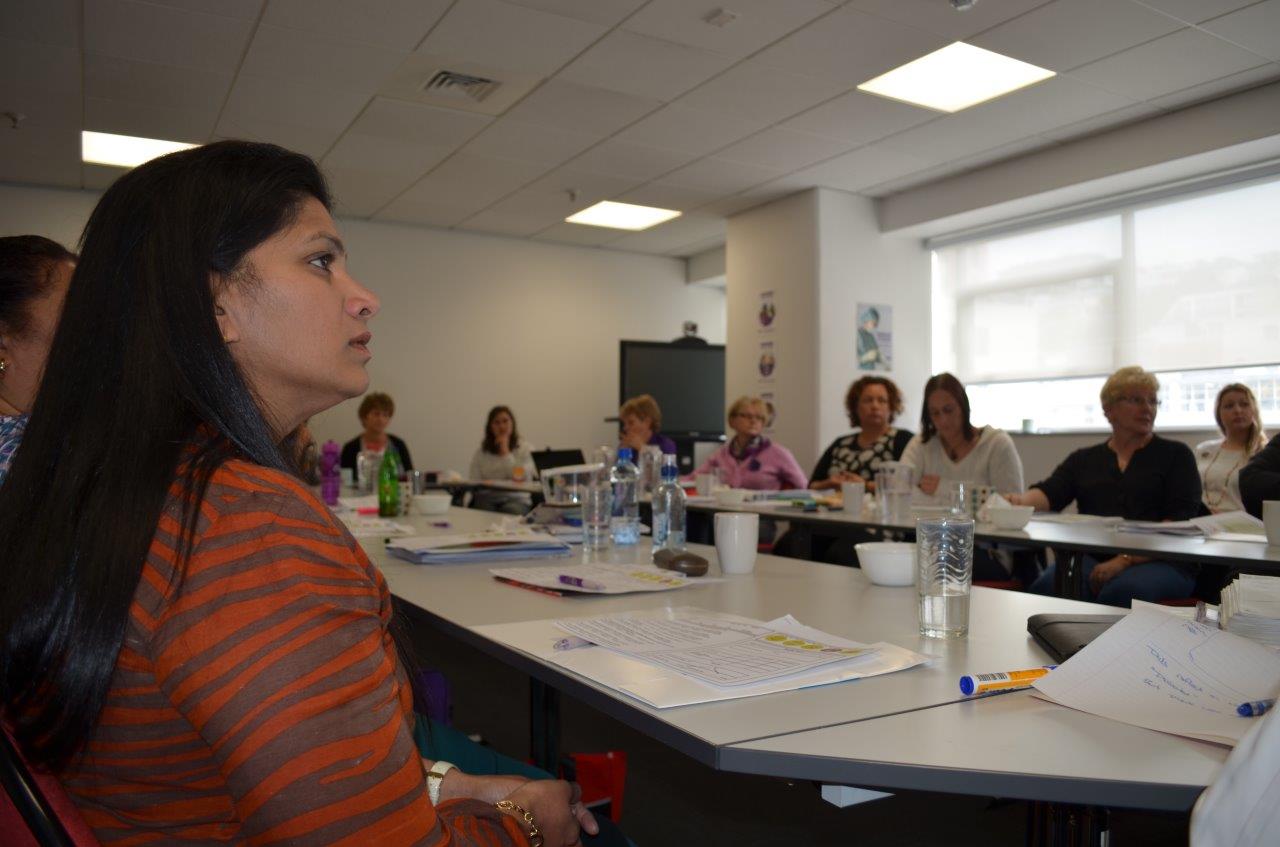
This is me (listening hard!) at an NZNO delegate training day a couple of weeks ago.

My name is Dilani Perera. I am an NZNO delegate and a caregiver at a resthome in Wellington. I have been following Kristine Bartlett’s equal pay case with interest.

When I heard yesterday about the Equal Pay case decision I couldn’t say anything for a moment. It took a while to sink in. It is such a wonderful decision and I will celebrate with my family at home and my other family at work. This decision means a lot to me and to every woman who works as a caregiver in aged care.

My life has not been easy but I love my job. Most days I get up before dawn to go to work and care for my old people at work. They are my second family. I look after them and care for them the way I would want my mother to be looked after.

I feel it is a privilege and a joy to care for our elders even though it is tiring and hard work. I’m always tired when I get home and I often feel bad that my family misses out.

Yesterday the Court of Appeal has told me that this country cares about me and the work I do and that the money I get is not enough.

I have worked here for 10 years and I have passed all the qualifications and still only get one dollar more than the minimum wage.

I am a solo mother and I have brought up my three children myself, and I never have enough for them. Our house is always cold. When my children ask me for something I have to think whether it is possible this week, or next week.

If I had equal pay I would have a better home and better food and better clothes. Better everything!

I would also spend more time with my family. It took me seven years to save enough money to visit my mother back home. If I had equal pay I could visit more.

Lots of my friends at work have two jobs and are so, so tired. I want them to be happy and well and enjoying their families.

I thank my sister Kristine Bartlett and my union for giving me a better life ahead. On behalf of all caregivers and their families too, thank you.

Thank you also to the Court of Appeal who finally made me feel like the work I do is valued.

This is a short clip we filmed late last year about equal pay.