NZNO's Blog


Leave a comment

Hell is truth seen too late

Anne Daniels, President
NZNO Tōpūtanga Tapuhi Kaitiaki o Aotearoa

It seems to me our society, indeed our world is currently topsy-turvy. In other words we are in a state of confusion or disorder with many unpredictable changes or reversals. My question is why?

Respected thinkers such as Dame Anne Salmond, a social scientist of distinguished merit, have been asking the same question. Dame Anne observes that she has taken democracy for granted. So have I. Surely democracy could not be removed from this country, but it is. Think about it. Look around. It’s happening in the USA where an anti-vaxxer has been appointed to the role of Secretary of Health and Human Services. And it’s happening here in New Zealand.

For instance, the Regulatory Standards Bill is set to elevate individual rights and private property above all other considerations in law-making in New Zealand. The Bill review is being led by the ACT party leader and Minister for Regulation David Seymour with a board appointed by the same minister. If you think that stinks, it does. Moreover, it smells of neoliberalist ideologies where freedom is for capital and investors, not ordinary people who are held in contempt or at the least are treated with callous indifference.

The Bill is set to strip away the rights of all those New Zealanders who support collective and environmental rights. As we commemorate another Waitangi Day, the attacks on te Tiriti o Waitangi are entwined with the not-so-subtle removal of fair wages, health and safety standards, environmental protections and other regulations (in the proposed Regulatory Standards bill, the Fast-Track Act, and the Treaty Principles Bill). Truth is what “sells” but the real truth is in what is not said or done by those perpetrating their version of the truth.

What does this have to do with NZNO and our members? As we enter again into negotiations with Te Whatu Ora, Primary Health Care and Aged Care, our members are being treated with a total lack of respect. This is being compounded with the latest Coalition attack on the rights of workers to strike under the proposed Employments Relations Amendment Bill and its ensuing pay deductions for partial strike.

Collective action through unionism is essential to address the imbalance of power between employee and employer and is necessary for workers to safeguard their rights in industrial relations. The ability to deduct from an employee’s wages is designed to render industrial action ineffective by shielding employers from the financial consequences of industrial action.  This amendment is strengthened by giving employers the discretion to suspend workers taking industrial action which is a punitive approach.

The entire point of industrial action is to impact upon the employer’s business. It is the principle means by which workers can gain leverage over employers in collective bargaining. Without this tool, we will be hamstrung in our negotiations. It will entrench inequity, inequality, and is a deep-rooted bias on the part of this Government against the collective interests of working people. It demonstrates a complete disregard for international law as it will be in breach of New Zealand’s obligations as a member of the International Labour Organisation.

We have 62,500 members and counting. We still have the right to strike and take industrial action. Every one of us has an obligation to use that right and not be swayed by employers who influence our members to do anything that undermines their colleague’s collective decision to take industrial action (NZNO Constitution 6.3.9) as NZNO members also have an obligation to act in accordance with the Constitution (6.3.1). We take industrial action to protect our vision to be free to care, proud to nurse, to be self-determined in shaping the role of the nurse so we lead the way to realise the ambitions of the Pae Ora Act, underpinned by te Tiriti o Waitangi.

We have a choice. We can all ‘Maranga Mai! (Rise Up) together and take united action to win the political and resourcing commitments needed to address the failing health system so we can care for our people. Or we can do nothing in the hope that someone else will do it.

“The only thing to prevent the triumph of evil is when good people do nothing.” Edmund Burke.

Stand up. Fight back!


Leave a comment

Tangatawhenua–ism not Trumpism is the solution for Aotearoa

Kerri Nuku, Kaiwhakahaere
NZNO Tōpūtanga Tapuhi Kaitiaki o Aotearoa

The new year kicked off with a political surprise – a new Minister of Health. Dr Shane Reti out and Simeon Brown in!

Since Dr Reti was appointed minister in 2023, we’ve made an effort to connect with him. We know that to get our members what they want and need, we have to be able to at least talk with those in power. Even if we disagree with their politics.

We never got from him what we wanted but the korero with him was always respectful.

We will not judge his replacement Minister Brown just yet. It is early days and we are yet to hear detail of his plans for our nation’s health system.

We have many questions for him. Will he move to deregulate the health workforce? Will he address the issues around pay equity and pay parity? How will he address issues of health justice?

What will he do to increase the shocking Māori life expectancy rate where tangata whenua live seven years less than non-Māori?

My questions may seem rhetorical but we will wait to hear him speak on these matters first.
The wider political environment in Aotearoa is concerning many of us.

We know the powerful influences on that environment are not of our land. They stem from Trumpism – ideologies grown in the United States and extracted from eastern Europe. They are right-wing, neo liberals where white supremacy rules and minorities don’t stand a chance.

That ideology can be found in the latest proposals of our country’s coalition Government, specifically, the Principles of the Treaty of Waitangi Bill (PTWB) and the Regulatory Standards Bill (RSB) which many are describing as the PTWB in disguise.

Over the next two weeks, I will verbally present NZNO’s submission on the PTWB to a parliamentary Select Committee.

Have a read of our written submission here.

You can also read our submission on the RSB here.

This Bill in particular concerns us because it has the potential to deregulate the health workforce, to diminish the mana of our professionals and tramp on mahi we have done as nurses and midwives.

If I were given a minute to speak to Minister Brown, I would encourage him to invest in the models and approaches tangata whenua have been using to try and heal their people.

Those models are working but due to no significant investment in them from successive governments, no one really hears about them. They need real support so they can be scaled up.

Just being Māori: Members of Te Poari, Te Runanga o Aotearoa-NZNO.

That homegrown thinking is of this land and all its people – Māori and non-Māori. Those tangata whenua ideologies aren’t just good for Māori, they are good for everyone in this land.

Our nation as a collective has benefited from many things taken from te ao Māori – the haka, te reo Māori just to name a couple.

Now it is time for decision makers to show some faith in that world and invest in Māori to bring forward their knowledge to heal our health system.


Leave a comment

Health Justice – The mana of our mokopuna

Kerri Nuku, Kaiwhakahaere
NZNO Tōpūtanga Tapuhi Kaitiaki o Aotearoa

This week, reports came out of tamariki in Ōpōtiki left alone after armed police raided their homes and arrested their parents. A kuia and her daughter-in-law strip searched for no clear reason. Other tamariki were left at school with nobody to collect them.

The police minister vehemently denies it, but Māori parents know all too well that these stories aren’t made up. Too many of us have too many similar stories to believe otherwise.

No mokopuna should ever have to go through the trauma of seeing their parents arrested to then be left to suffer alone. 

This Government’s ‘tough on crime’ approach is not only ineffective but is also producing a new generation of traumatised tamariki and rangatahi. 

Dame Whina Cooper said, “Take care of our children. Take care of what they hear. Take care of what they see. For how the children grow, so will the shape of Aotearoa.” 

That couldn’t be more relevant than now. 

How we treat tamariki and rangatahi, and especially how we treat the mokopuna of those we believe to have done social harm, is one of the most significant reflections of the moral sensibility of a society. 

And how do we see Māori, African American, Palestinian, Aboriginal and First Nations tamariki and rangatahi being treated? They are criminalised, put into abusive state care, and traumatised through over-policing and an injustice system. 

This all reflects pure dehumanisation. It shows a racist ruling class that believes that it is ok to trample on the mana of mokopuna. More than that, it shows a government whose definition of justice causes further intergenerational trauma through force and fear.

It is a dark week, where the Treaty Principles Bill has been introduced early in a cowardly attempt to avoid the mass hīkoi happening down the motu. 

In this darkness, there are so many lies spread about who should make decisions and what equality means. After all, the Treaty Principles Bill says, in essence, that the colonial government can do what it likes irrespective of what actually works for tangata whenua – like boot camps or Oranga Tamaraiki. 

That’s why it’s important to remember that contrary to whatever the Government will try to have you believe, Te Tiriti o Waitangi is all about justice. It’s about hapū and iwi doing what they know best to make the world safe and prosperous for their whānau and mokopuna. Part of that is dealing with social harm through our own tikanga.

As health workers we must think more broadly about health justice broadly, we see the physical, emotional, and mental toll of racism, colonialism and dispossession first hand. 

So, to re-focus us we need to return again to the words of Whina Cooper.

“Take care of our children… For how the children grow, so will the shape of Aotearoa.” 

What shape do we wish to see? Can’t we see that how we care for our children is how we care for our future? Don’t we wish for justness that upholds the mana of our mokopuna? 

I know what kind of Aotearoa I believe in. It is own time to be courageous and shape Aotearoa.


Leave a comment

There are benefits to sharing power with one million Māori

Kerri Nuku, Kaiwhakahaere
NZNO Tōpūtanga Tapuhi Kaitiaki o Aotearoa

It’s not unusual in any political cycle that indigenous people are used as political fodder. Internationally, nationally and regionally, indigenous people are blamed for increasing violence, homelessness, poverty and draining state resources particularly in justice, welfare and health.

It becomes easy for ordinary people to believe this because the perpetrators of lawlessness and violence, relentlessly splashed all over the media, are disproportionately images of people of colour. At the heart of these political games are people, children and mokopuna who are already prejudged by parts of society because they look a certain way or are born into a particular class of people.

Shifting the burden of responsibility is easier to do because it is harder to admit that we have failed as a country and we have failed to support our indigenous people.

In Aotearoa, a year into the Coalition Government, attacks on workers, unemployed and Māori are clear to see. From the Treaty Principles Bill and the Māori Wards referenda to the scrapping of Fair Pay Agreements, benefit sanctions, and the war on health and safety legislation, this is a right-wing Government bent on stoking racism, eroding worker rights, and helping the rich get richer.

The assault on our rights is overwhelming, but it has also heightened the consciousness of those who want a more just world. Yet, though we say it all the time, we have to acknowledge that even though this coalition is absolutely terrifying and hateful, no Government of the past few decades has made truly transformative change that benefits the health of our people.

We can’t wait for more promises from politicians or experts to tell us what we already know. We know what it would take to be truly valued in the work we do, and we know what it would mean to live in a society that upholds equity, human rights and Te Tiriti o Waitangi.

We all know what Māori health inequities look like.

As nurses, we know Māori are unlikely to live as long as non-Māori. We also know that by the time many Māori reach the hospital, their illness is advanced and sadly, the clock already began ticking for them before we even triaged them.

There is one common question I’m often asked by non-Māori members and colleagues, who like me are sick of seeing so many tangata whenua die of things that could have been prevented or treated if caught earlier.

That question is: “what’s the best way to address Māori health inequities”?

In my view, the answer does not lie in the medical or the clinical.

The answer lies in sharing power (and responsibility) with Māori at all levels from the boardroom table to the frontline, backline and sidelines, inside and outside our union.

The Māori population is now at its highest – one million – and at the rate my whanau, hapu and iwi are going, it will only rise.

From the people of Ngai Tahu in the South Island to the people of Ngapuhi at the top of the North Island, Māori want the genuine partnership guaranteed to them in Te Tiriti o Waitangi. They want to be in control of their own destiny, they want mana motuhake.

Māori have proved they can fix themselves when power, and that includes resources and spaces, are shared with them and when they are not micromanaged.

In the 1980s, the Māori language had almost become extinct until Māori created the kōhanga reo movement. Forty years later, the language has been saved – tens of thousands of Māori are speaking it. And hundreds of thousands of non-Māori are benefiting too.

At NZNO, we are still on the journey of sharing power, resources and spaces with Māori. The position I hold is a clear example that we have started that journey. But it must not stop there.

We must let Māori fix themselves. Tangata Tiriti or non-Māori in Aotearoa can do that by sharing power, resources, spaces with Māori at every level of our mahi.

Sometimes that means tangata Tiriti stepping aside to let Māori talk rather than talk for them.

What’s good for Māori, can only be good for this nation because when the most disadvantaged in our society are empowered, everyone in that society benefits.


Leave a comment

It’s about life

Kerri Nuku, Kaiwhakahaere
Tōpūtanga Tapuhi Kaitiaki o Aotearoa NZNO

On 28 February CTU’s youth wing, Stand Up, organised a protest at Parliament against the Government’s all-out assault on Te Tiriti o Waitangi, Te Taiao, and workers. Of all the powerful kōrero from that rally, one stuck out prominently because of its strength and its relevance. It came from Action Station director Kassie Hartendorp (Ngāti Raukawa, Ngāti Tuwharetoa) who hit home exactly what the disestablishment of Te Aka Whai Ora means.

“Te Aka Whai Ora was about life,” she said.

It was about the simple but horrifying fact that Māori die seven years younger than Pākehā. All Te Aka Whai Ora was intended to do was find ways to close that gap so our mokopuna get seven more years with their kaumātua; So we can have seven more years to keep deepening our reo and tikanga; So we can have seven more years living with Ranginui above us, Papatūānuku beneath us, and growing in the universe that our tūpuna fought so hard to deliver us into.

We know in health that equity literally is the difference between living and dying. How can they justify this, knowing that it means people dying too young? This Government intentionally attacks any policy or structure that aims to create equity because they maintain their power through racism and division. And if that means death so be it. They will continue to trample on Māori and as they do they will blame us for the outcomes of the injustice they have created.

But they won’t just blame Māori. They’ll blame women for not being able to earn enough. They’ll blame young people for not being able to keep a job. They’ll blame nurses for not being able to keep up with the demands of tangata whaiora. They’ll use their power and control to try to convince us all that we are responsible of our own exploitation and oppression. Or, of course, they’ll wheel out their favourite tactic: saying that the real reason workers have no power is because Māori are trying to take it.

Yet more and more, people are understanding that this is not the case. The Toitū Te Tiriti movement has seen unprecedented shows of solidarity from Pākehā and tauiwi because people are seeing the restoration of tino rangatiratanga not as a threat, but simply as a matter of justice and equity. As Angela Davis said, “I am no longer accepting the things I cannot change. I am changing the things I cannot accept.” People are standing up and saying they do not accept the idea that Māori are powerless on their own land. They do not accept that Māori will die seven years before Pākehā. And they will not accept the erosion of workers’ rights, nor the destruction of the earth.

This struggle concerns all of us. You must understand that this Government will continue to do all in its power to dismantle everything we have fought so hard for, including the structures that protect you at work. If you see the injustice and cannot accept this reality, then you have a role to play. Together we have the power to change the world. We simply must take the next step and show true leadership, unlike those in Parliament. That means getting organised, talking with each other, and taking our struggle to the streets.


Leave a comment

(In)Justice

Anne Daniels, President
Tōpūtanga Tapuhi Kaitiaki o Aotearoa NZNO

“Our lives begin to end the day we become silent about things that matter.”
― Martin Luther King Jr

Last year, I had the privilege of attending most of the NZNO Regional Council Conventions. During the day we discussed member engagement and what motivates members to get involved by going to meetings, rallies, protests, and taking on an advocacy role such as being a delegate, or health and safety representative. The answer was anger at injustice. Anger overcomes fear. Anger motivates a person to find out how to right the wrong. Anger motivates a person to become part of the solution through action.

Justice assumes that society has a responsibility to treat people fairly. Society confirms concepts of justice in its legal frameworks. There is an inter-relationship between law and justice, which means that one does not automatically override the other. Laws are modified over time, and it’s thought that when they are applied, justice is increased.

But does it? What if the law is unjust? What if there is no law to provide justice? Right now, in New Zealand, laws are being repealed and changed which will result in injustice in our society and lead to an increase in poor health outcomes for those we care for. So, what do we do about it?

It is said there is power in the people to create change. The history of protests shows this to be true. The Kia Ora incident (1984) is an example of one person starting an action, and seeing it finish with the power of the people behind her. Naida Glavish, a telephone operator was instructed to stop using “Kia ora” when greeting callers. Glavish refused and was stood down, with the whole affair attracting much public interest. She was later given back her job when the Postmaster General, who initially supported the Kia ora ban, changed his mind, and persuaded the Prime Minister Robert Muldoon to overturn the prohibition. This incident was considered key in the movement to revitalise the Māori language. The power of the people overcame the injustice.

On Waitangi Day 2024, I was asked to attend a hikoi in Dunedin to protest against the current Government’s policy to review te Tiriti o Waitangi, our country’s 180-year-old founding document, which will “unravel decades of indigenous progress” I have attended and led many protests in my time, but this hikoi was the first where there were so many people participating, I could not see the end of the march. The power of the people was palpable. Māori and non-Māori came together to fight injustice. I knew that this was just the beginning. Justice will be served.

So, it must be for NZNO members. Exhaustion, fear professional and personal responsibilities cannot hold us back from standing together and acting against the injustices perpetuated against us and those we care for. Inaction perpetuates injustice and consequent suffering, negates change, and is done to us, without us. We cannot stand by and allow this to happen. Every member everywhere must heed the call of our Maranga Mai! Strategic Plan 2023-2025, and act locally, regionally, nationally. Together we stand, divided we fall. We cannot wait for ‘someone else’ to do it for us. Each one of us has the power to make a difference. But we have unstoppable power when we act together in “unionity”.

NZNO represents more than 60,000 members. Together, we are a power to be reckoned with. This year the Membership Committee (made up of regional council representatives) will work with other NZNO groups to reach out to ask every nurse, everywhere to raise their voice and do the mahi. This year we will fight the injustice of being told to do more with less, putting ourselves and our patients at risk. Nurse-patient ratio legislation will protect us from these injustices but together we will have to fight on the picket lines, and in the halls of power. Marvin Gaye sang “Picket lines and picket signs/Don’t punish me with brutality/Talk to me, so you can see/Oh, what’s going on.” I will see you all there, Every nurse, everywhere.


Leave a comment

Toitu Te Tiriti

Kerri Nuku, Kaiwhakahaere,
Tōpūtanga Tapuhi Kaitiaki o Aotearoa NZNO

Te Tiriti o Waitangi is the contract setting out rights and conditions for Māori and non-Māori to come, live and share the land. Te Tiriti has always been about honouring the agreement as we live and evolve as a country, sharing power.

As indigenous people across the world continue to fight for their rights and freedom, tangata whenua Māori struggle from the impact of colonisation. History is written to advantage the privileged. 

Legislation upon legislation was introduced to speed up the assimilation of Māori, especially within the health sector.

The Nurses’ Registration Act 1901 impacted on Māori tapuhi. Prior to the enforcement of the Act, tapuhi were providing care to communities using traditional Māori medicines travelling to wherever the communities needed help. Following the introduction of the Act Taphui were considered unskilled, not capable of providing care, and were branded illegal.

The assault of the 1907 Tōhunga Suppression Act was an intentional effort to suppress tohunga (Māori experts) by removing the use of rongoa (traditional medicines) and tikanga (traditional and spiritual health). Further legislation was passed to allow Māori nurses to train and go into the districts as “ambassadors” to enforce the use of western medicine.

Māori nurses who did train under the western medical model were further alienated when their name was entered on the registration. Māori nurses were discouraged from using their Māori names. Each Māori nurse was strongly encouraged to change her name to a more acceptable English version, or they were merely recorded as a number. Māori men, who once played an important role in childbirth, were not permitted to be nurses or midwives.

The process of colonisation entrenched intergenerational disparities in health and negatively impacted the outcomes for Māori across all sectors of society. The impact of these health inequalities reflected today in our shorter life expectancy, include reduced access to Primary Health Care, less treatment and greater risk of misdiagnosis and mistreatment – and all continue today. Such inequalities are unacceptable, unfair, and unjust in a developed country like Aotearoa New Zealand.

As a Māori health professional, it is soul destroying to have to enforce the policies and practice that continue to negatively impact on Māori health outcomes. As a Māori midwife, I saw the disadvantaged young mothers and whānau, and the policies that impose privilege to some and not to all. I could not be the observer, I wanted to be part of the change.

It is not fact that, “Māori are far better off now than what they were prior to the coming of the British” or that we bear the scars of histories abuse.

This talk and action by the new Government is tantamount to circling back and reenforcing colonisation. The time for Māori and non-Māori to rise up again has arrived.

The peaceful marches on 4 December gave renewed hope. Māori and non-Māori katoa sent a powerful message of unity and the aspiration for a te Tiriti future.

Kia kaha to a restful summer and enjoy spending time with whānau.


1 Comment

NZNO celebrates World Smokefree Day by lodging our smokefree services petition

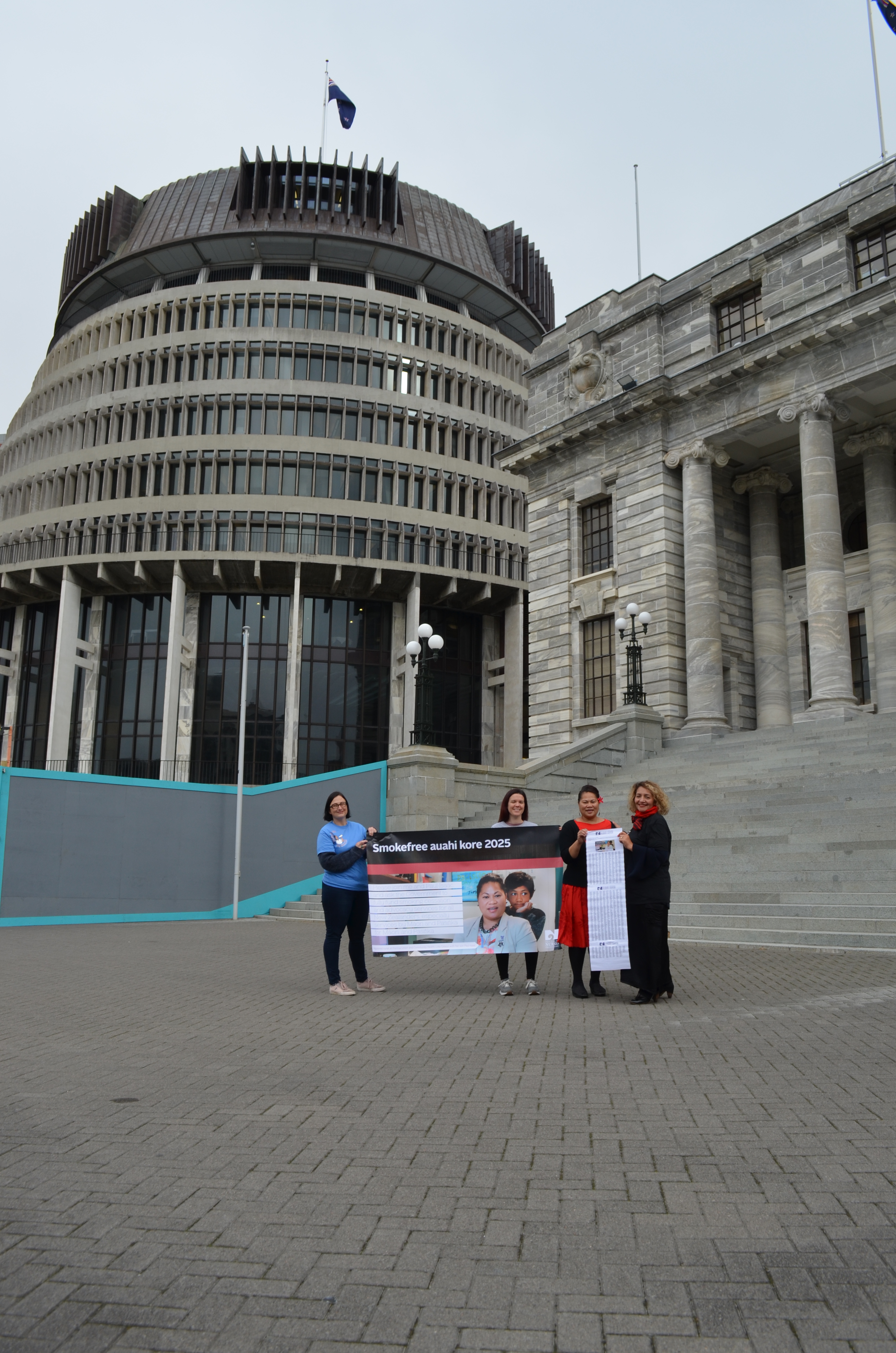
DSC_0176

Today, the 31st of May is World Smokefree Day. Every year the Health Promotion Agency puts out great resources for people want to quit smoking and stay off tobacco for good. They have infographics to download and motivational facts like the one below. Not many people know that smoking makes you deaf!

Hearing-loss_GIF

Researchers have identified though that without further big changes, New Zealand will not reach our smokefree 2025 goal, particularly for Māori and Pacific communities. That’s why NZNO was distressed when we heard last year that funding for some iwi and community smoking cessation providers was being cut, as well as for advocacy services like the Smokefree Coalition. NZNO Kaiwhakahaere Kerri Nuku said ““It doesn’t make any sense that on the one hand the Government supports the goal of Smokefree Aotearoa 2025, but on the other is pulling funding out of Smokefree advocacy services including the Smokefree Coalition, ASH and Smokefree Nurses. Every day we see the effects of smoking on our patients’ physical and mental health, and the social, economic and cultural wellbeing of their whanau. It’s heartbreaking.”

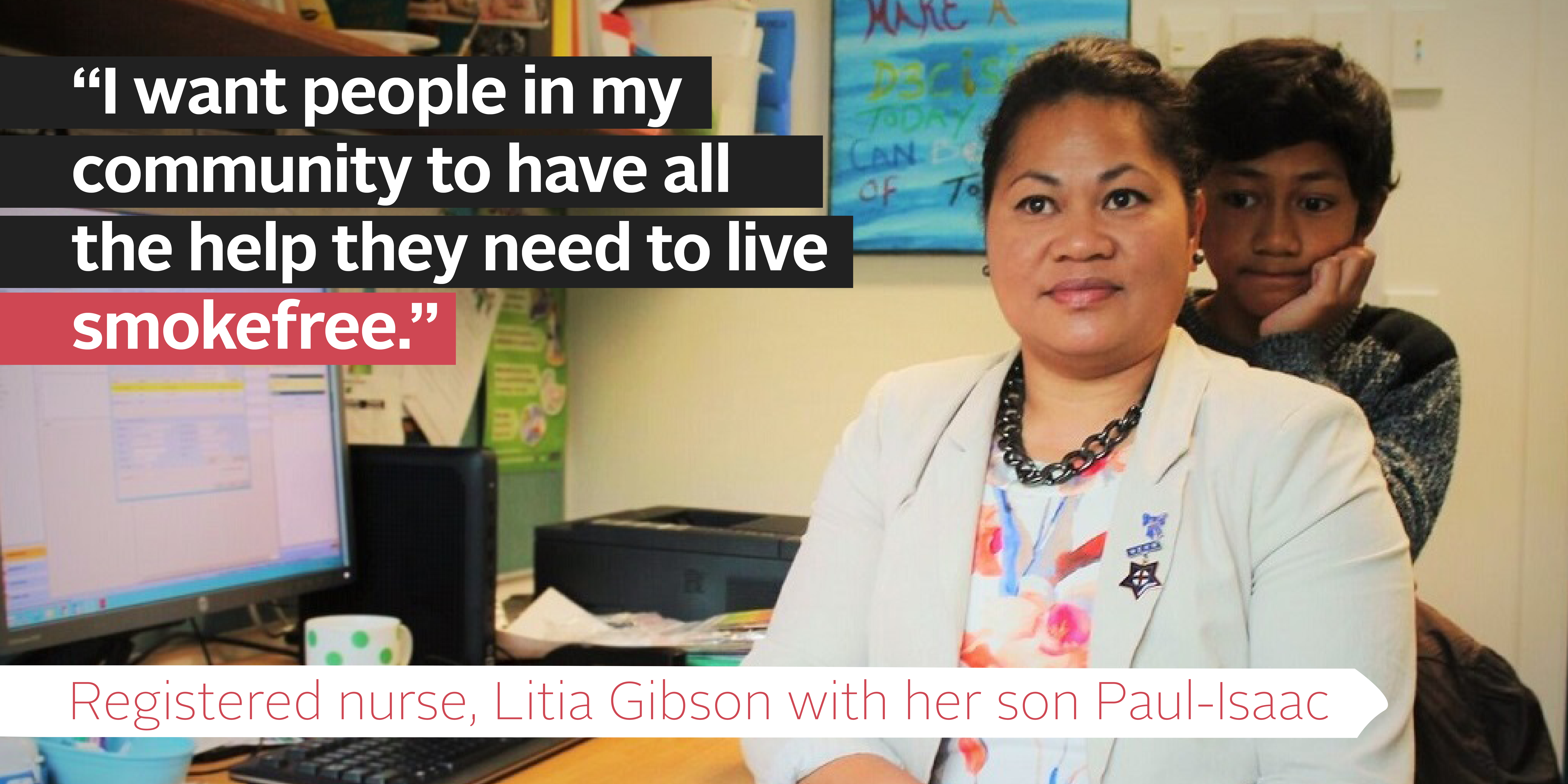
Nurses working to stop smoking in the community say they need advocacy and specialist services to refer patients to and reinforce their stop smoking message. Porirua Community Union’s Litia Gibson talked about the need for these services to NZNO last year in this video. “Any cut will affect all our services. Because it’s not just the services we provide, it’s the patients and the populations that we are caring for who are already in vulnerable positions.”

Social share3.3.jpg

NZNO decided to run a petition with Together, the digital campaigning arm of the Council of Trade Unions, to ask for more funding for these services. Today, we delivered 1823 signed names of nurses, caregivers, midwives, kaimahi hauora and their supporters to Marama Fox MP, in recognition of the longstanding work that she and her predecessors in parliament have done on ending smoking in New Zealand.

Litia and Marama had a little chat afterwards where Litia broke down the issues around referral services and increasing workload for nurses. “Without specialist services, we don’t have the time. You need to pack so much into an appointment, because with health funding where it is, community need is so great.”

Marama agreed on the need appropriate smokefree services and the future benefit this can bring to our country. “Being smokefree puts real money back in the hands of whānau. It protects our future generations, and ensures they don’t have to make the same decision to quit because they never start. It’s all about whānau.”

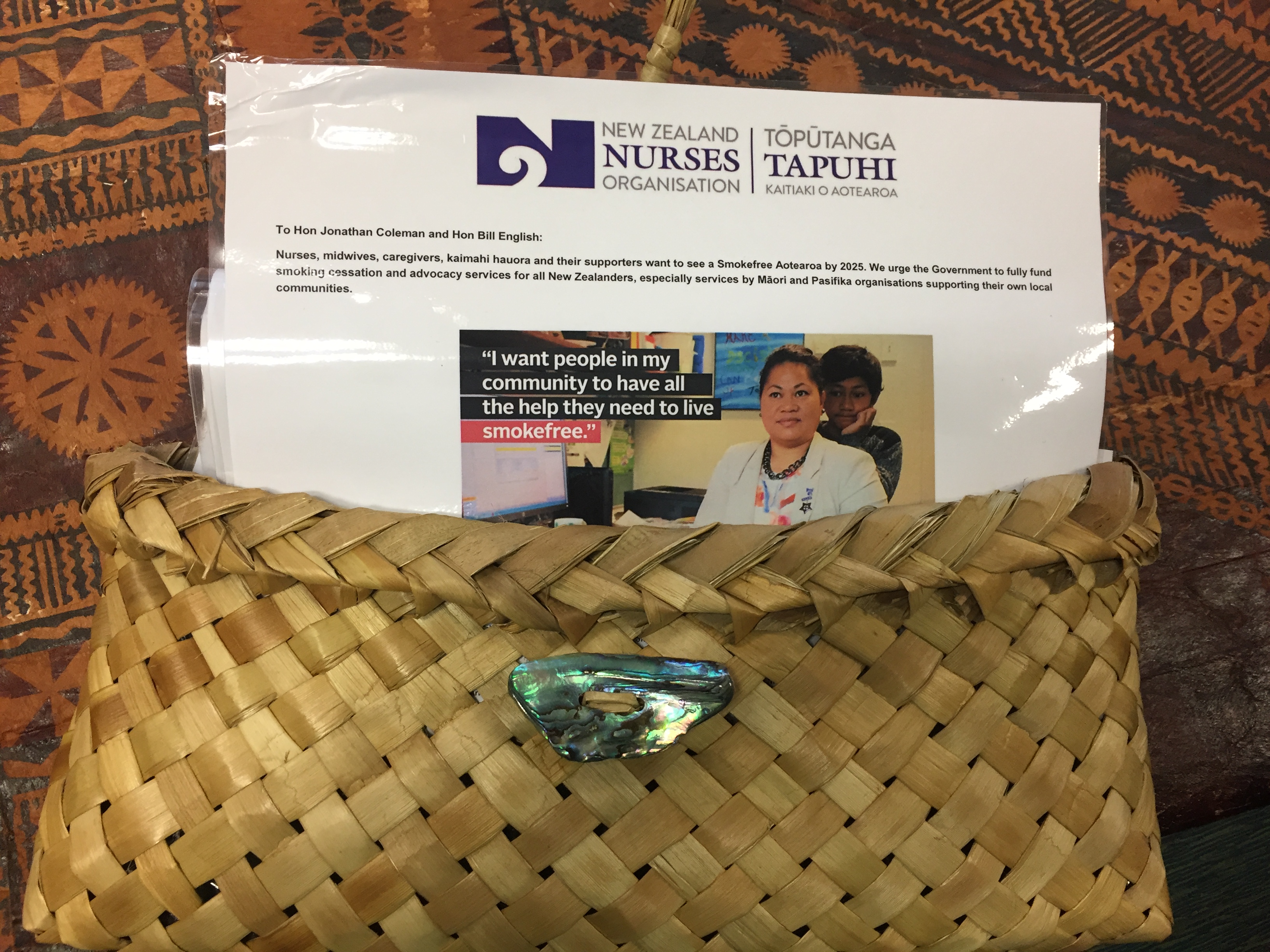
Marama had brought along a beautiful kete to put our petition in and present it to parliament. Litia in return swapped her red flower to put in the MP’s hair for the afternoon- ‘There, now your outfit is complete!’


We are proud that a little bit of NZNO is being delivered to parliament on World Smokefree day to support our Smokefree 2025 goal. Kia kaha koutou, thank you for supporting this mahi. Your names are now part of history.

IMG_1330


4 Comments

Where to next on pay equity/equal pay?

This blog is by Cee Payne, Industrial Services Manager for NZNO. Cee represented NZNO as part of the cross union bargaining team in the hard – won settlement offer for caregivers. Here she outlines some issues with the new proposed law, and what NZNO members can do to make it better.

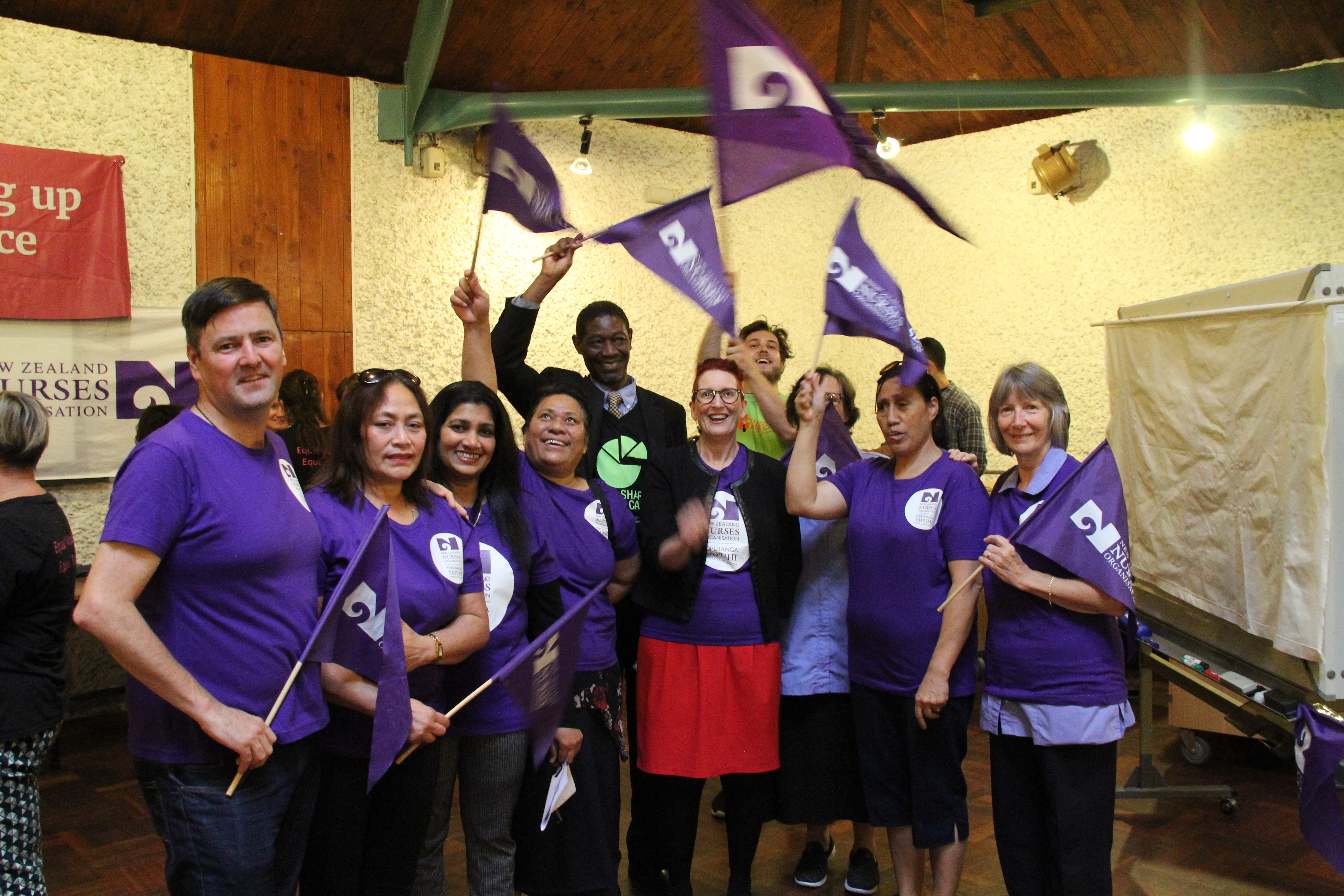
IMG_5116Excitement at the pay offer settlement announcement for caregivers. Cee is pictured centre in the red skirt in front of Memo Musa, NZNO CE, Grant Brookes NZNO President at left, and NZNO caregiver members.

Pay equity/equal pay has been on a roller coaster ride in the last few weeks in New Zealand. First, we had the historic announcement of the Government’s $2 billion offer of settlement for Kristine Bartlett’s pay equity case for caregivers. The mood from caregivers across the motu was one of total relief and celebration. These women have been waiting so long on the minimum wage or close to it for better recognition of their value. It felt like the confetti had barely settled the very next day when the Government announced they were introducing a new draft Employment (Pay Equity/Equal Pay) law. This law includes a new ‘principle’ –the ‘proximity principle’ – that could have stopped Kristine’s case from ever happening

The mood of celebration turned into a gasp of disbelief from many of our members, who understandably worry about what this means for them. Unions were just as upset at both the message and the timing. The really annoying thing is that apart from this problem and a few other issues we can improve on, the new law sets out a better and easier process for making future pay equity/equal pay claims. It means other groups of women don’t have to go through many expensive rounds of court battles to achieve pay equity/equal pay.

I was one of the negotiators on the pay equity settlement for care and support workers and on the cross union, government and business equal pay principles working group. We had nearly two full – on years of research, meetings, and consultation to get the result we did for care and support workers. And although it was a long process, I believe the principles we used can work, if they are not restricted by this new ‘proximity principle’. In fact, New Zealand will probably have the best pay equity/equal pay law in the world if we can sort this out.

Kristine and the negotiation team signing the terms of settlement of the pay equity offer for caregivers in the Beehive, Monday the 2nd of May 2017. Cee is signing on behalf of NZNO.

Pay equity is being paid fairly for different jobs that are similar, and equal pay is being paid the same as men for the same work. What the Government is proposing for pay equity is that for women in historically female dominated jobs you have to first find a relevant male-dominated job to compare yours to in your own workplace. Then if there is no relevant job available, you can look in your own industry before you can look outside your sector at other jobs done mostly by men with the same or similar skills, training and responsibilities. So for Kristine Bartlett for example, her employer wanted to argue she should be compared to a gardener working at a rest home. But wages are low across the whole aged care sector because it is female dominated, so her union E tū thought she should be compared to a Corrections Officer-a better fit for her skills, responsibility, effort and conditions of work. These male dominated jobs are called ‘comparators’.

Finding the best comparator or even multiple comparators can be a long process but it’s an important one to get right. There will be no perfect male-dominated equivalent, so you might need to take one job for the qualifications, another for the effort, and a third for similar conditions of work to make your case. NZNO believes it’s really important we find the best job, not the physically closest, especially since so much of the health sector is female dominated. Otherwise, equal pay cases could be artificially restricted by the same discrimination we are trying to re-balance.

The good news is it’s not too late. The Government is taking submissions on the new law until the 11th of May before it has to start going through parliament. The more people that write to them, the better chance of removing this new principle to get the fairest comparators. It is imperative the Government passes the best pay equity/equal pay law in Aotearoa/New Zealand.

We don’t know yet which other parts of the membership could be eligible for cases in the future, or if police, engineers, or any other job would be the best ‘comparator’. NZNO is committed to 100% of our members who are performing work historically undertaken by women achieving pay equity/ equal pay. There are existing pay inequalities between different groups of our membership, and we need to carefully go through each group once we have the new law. Any case of course would involve significant consultation with and campaigning from members, just like we did with caregivers.

But right now the most important thing for all future cases is getting a fair and sustainable law that works. For that we need your support. If you feel passionate about women being paid for their worth and ending gender discrimination forever, write to the Government right now and tell them why you don’t support the ‘proximity principle’ before they write it into the law. Send us a copy of what you said too by emailing nurses@nzno.org.nz. It could be the best invested 5 minutes of your life.